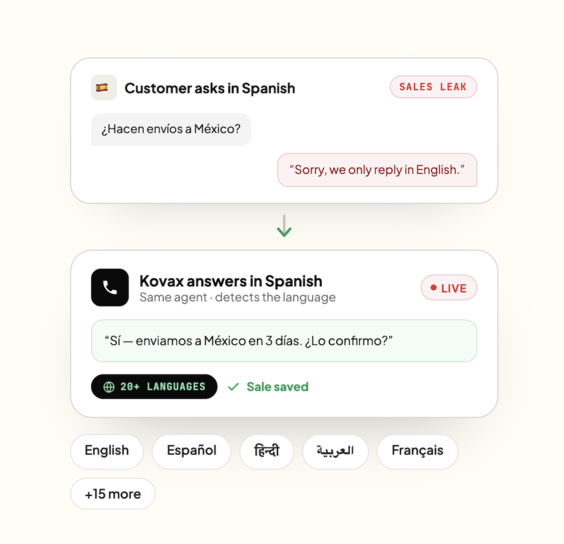
Multilingual customer support is help you give shoppers in the language they actually speak, across chat, email, phone, and WhatsApp. For a Shopify store selling in more than one country, this is not a nice extra. It is where a lot of quiet revenue leaks out. A shopper lands on your store, likes a product, has one question, and cannot get an answer in their own language. So they leave.
Most stores fix the storefront text and stop there. The product pages get translated, but the support behind them stays English only. That gap is the real problem, and it is fixable. This guide covers the challenges, the tools, and a clear setup you can follow.
What multilingual customer support means for a Shopify store
It means a customer can start and finish a conversation with your store in their own language, from the first question to the after sale follow up. Not just a translated homepage. The whole support path: the chat reply, the help article, the phone call, the return request.
There is a simple test. Pick your second biggest market. Ask a question as a customer in that language, on every channel you offer. If any channel answers only in English, you have a gap. That gap is where trust drops and carts get abandoned.
Why more Shopify stores are going multilingual in 2026
Language changes buying behavior more than most founders expect. In the widely cited Can't Read, Won't Buy studies from CSA Research, about 76% of shoppers said they prefer to buy products with information in their own language, and around 40% said they will not buy from sites in other languages at all.
Support is part of that same expectation. In Unbabel's 2021 global survey of 2,750 shoppers across six countries, 68% said they would switch to a different brand that offered support in their native language. People do not just want to read your store in their language. They want to be helped in it.
Shopify has made the storefront side easier. According to the Shopify Help Center, most plans let you publish up to 20 languages, Shopify Plus supports up to 30, and checkout plus default theme content is pre translated into 33 languages. The platform can show your store in many languages. It does not answer your support tickets for you. That part is still on you.
The 5 biggest challenges of multilingual customer support
The hard part is rarely the translation itself. It is running support well in many languages at once, without a huge team. Here are the five issues that trip up most Shopify stores.
| Challenge | What goes wrong | Why it hurts sales |
|---|---|---|
| Routing the right language | A French question lands with an English only agent | Slow replies, or no reply at all |
| Tone lost in translation | Machine output is correct but cold or odd | Customer feels like a number, trust drops |
| Time zones | Your team sleeps while another market shops | After hours questions go unanswered |
| Channel gaps | Chat is translated, phone and WhatsApp are not | Customer hits a wall on their preferred channel |
| Cost of native speakers | Hiring per language is expensive | Support burns margin, so stores skip it |
The last two are the real budget killers. Hiring one multilingual customer care agent per language does not scale for a small store. And the phone is the channel most stores leave English only, even though it is where the hardest questions land.
Shopify localization vs multilingual support: not the same thing
These two get mixed up all the time, and the mix up is expensive. They solve different problems.
Shopify localization is about your store content: product titles, descriptions, buttons, checkout, currency, and sizing. It makes the store readable and native feeling before anyone talks to you. Tools like Shopify's own Translate and Adapt app handle most of this.
Multilingual customer support is about the conversation after that: the question the shopper asks and the answer they get back. You can have perfect shopify localization and still fail here if your chat, help desk, and phone only work in English.
Think of it this way. Localization gets the sale started. Support gets it finished. You need both, and they should link together. A common fix is to keep the product page and the support page for the same topic in the same language, so the shopper never gets bounced back to English.
The tools that actually solve it
There is no single tool that does everything. Most stores stack a few, matched to the channels their customers actually use. Here is how the main options compare.
| Tool type | What it handles | Best for | Watch out for |
|---|---|---|---|
| Store translation apps | Site text, checkout, theme | Getting readable fast | Does not touch support replies |
| Multilingual live chat | Typed chat, auto translated | Quick pre sale questions | Machine tone on complex issues |
| Multilingual help desk | Tickets plus self serve articles | Organizing email and FAQs | Articles must be kept current per language |
| Multilingual chatbot | Instant answers to common questions | Deflecting repeat FAQs 24/7 | Struggles with anything unusual |
| Multilingual call center | Phone, complex or upset callers | High trust, high value calls | Costly to staff per language |
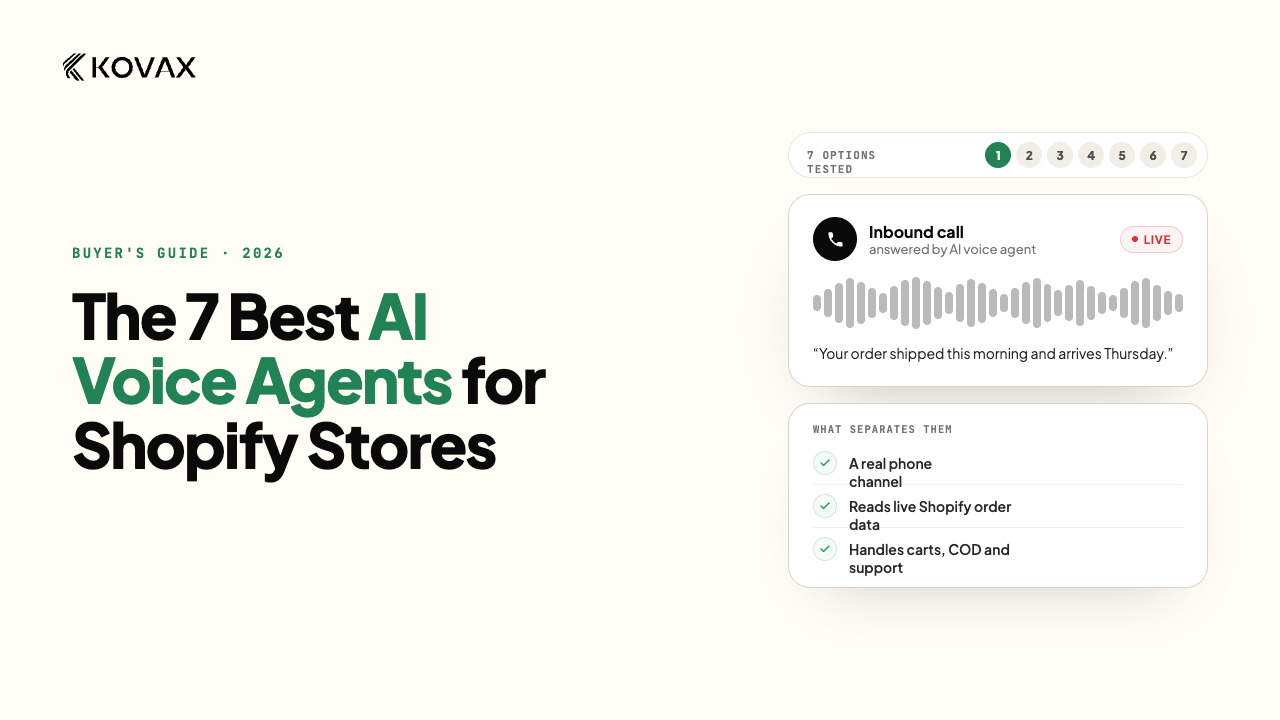
| AI voice agents | Phone calls, many languages, 24/7 | Round the clock phone cover | Newer, needs Shopify native setup |
A multilingual chatbot is the cheapest way to catch repeat questions in many languages, and it works while you sleep. A multilingual call center is the old answer for phone, and it works well, but paying for native speakers on every shift is where most small stores tap out. That budget gap is exactly why AI voice has moved into this space. If you are weighing chat tools specifically, the ecommerce chatbot buyer's guide goes deeper.
How to set up multilingual customer support on Shopify, step by step
You do not need all of this on day one. Add channels in the order your customers actually use them.
Step 1: Pick your real languages, not a guess. Open your Shopify Markets and analytics data and see where orders and traffic come from. Add languages for the markets that already buy, not every language you could imagine.
Step 2: Localize the store first. Get your product pages, checkout, and key policies into those languages. This is the shopify localization layer, and it should be solid before you add support on top.
Step 3: Build self serve in each language. A translated help center answers the most common questions before anyone contacts you. This is the cheapest support you will ever run.
Step 4: Add real time text channels. Turn on multilingual live chat and a multilingual chatbot so a shopper mid purchase gets an instant answer in their language.
Step 5: Cover the phone. Decide between a multilingual call center and an AI voice agent based on call volume and budget. Phone is where returns, order problems, and high value questions land, so do not leave it English only. There is a full breakdown on handling Shopify calls without hiring.
Step 6: Keep the tone human. Build a small glossary of your brand words per language, and spot check machine output. Correct but cold answers still lose trust.
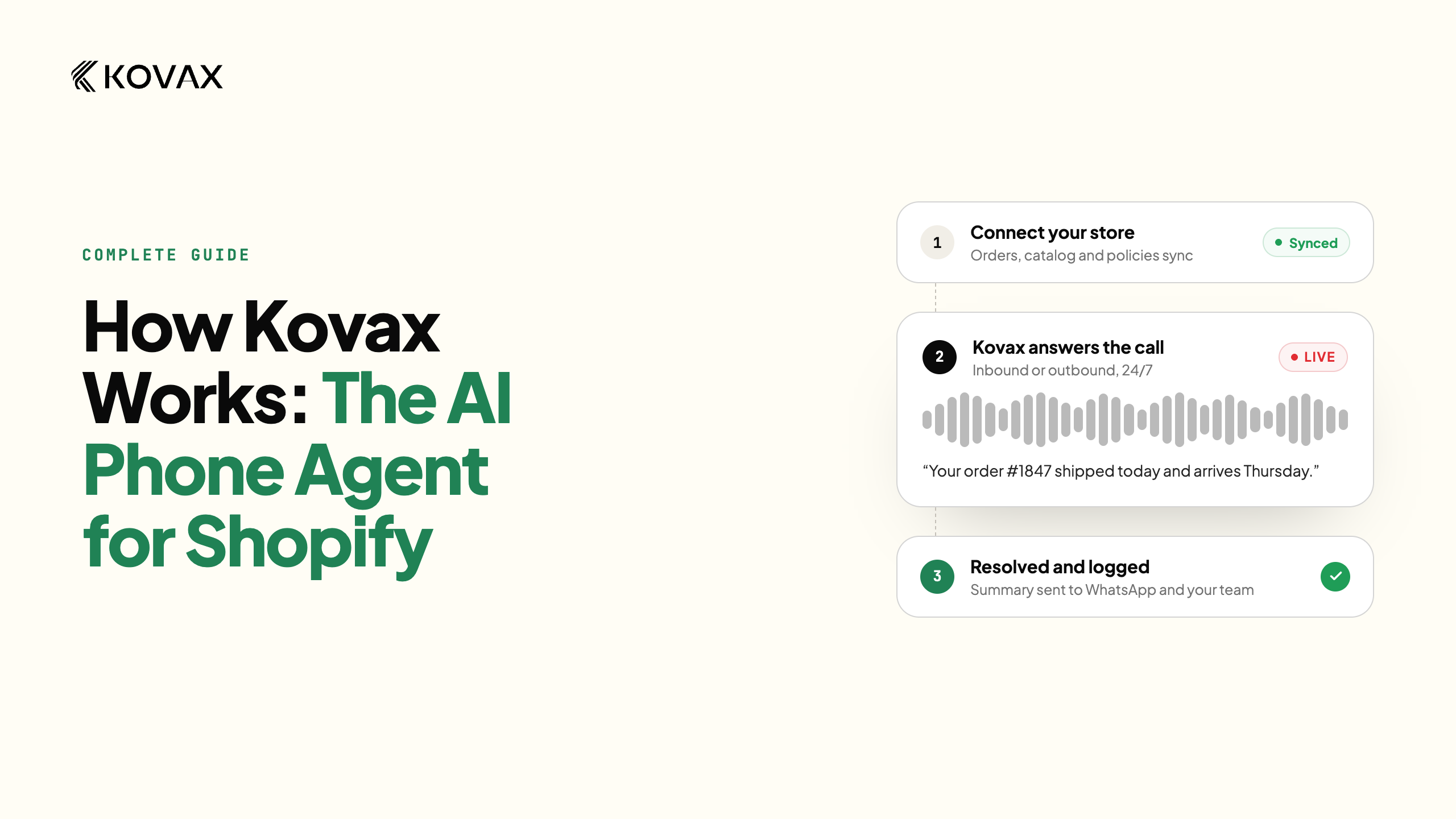
If you want the phone side handled without hiring per language, that is what the Kovax Support and Tracking agent is built for. You can see how the whole setup connects to your store in the how it works overview.
Where AI is changing multilingual customer care
The old trade off was simple and painful. You either paid for native speakers on every shift, or you left whole markets without real support. AI voice and chat have loosened that trade off.
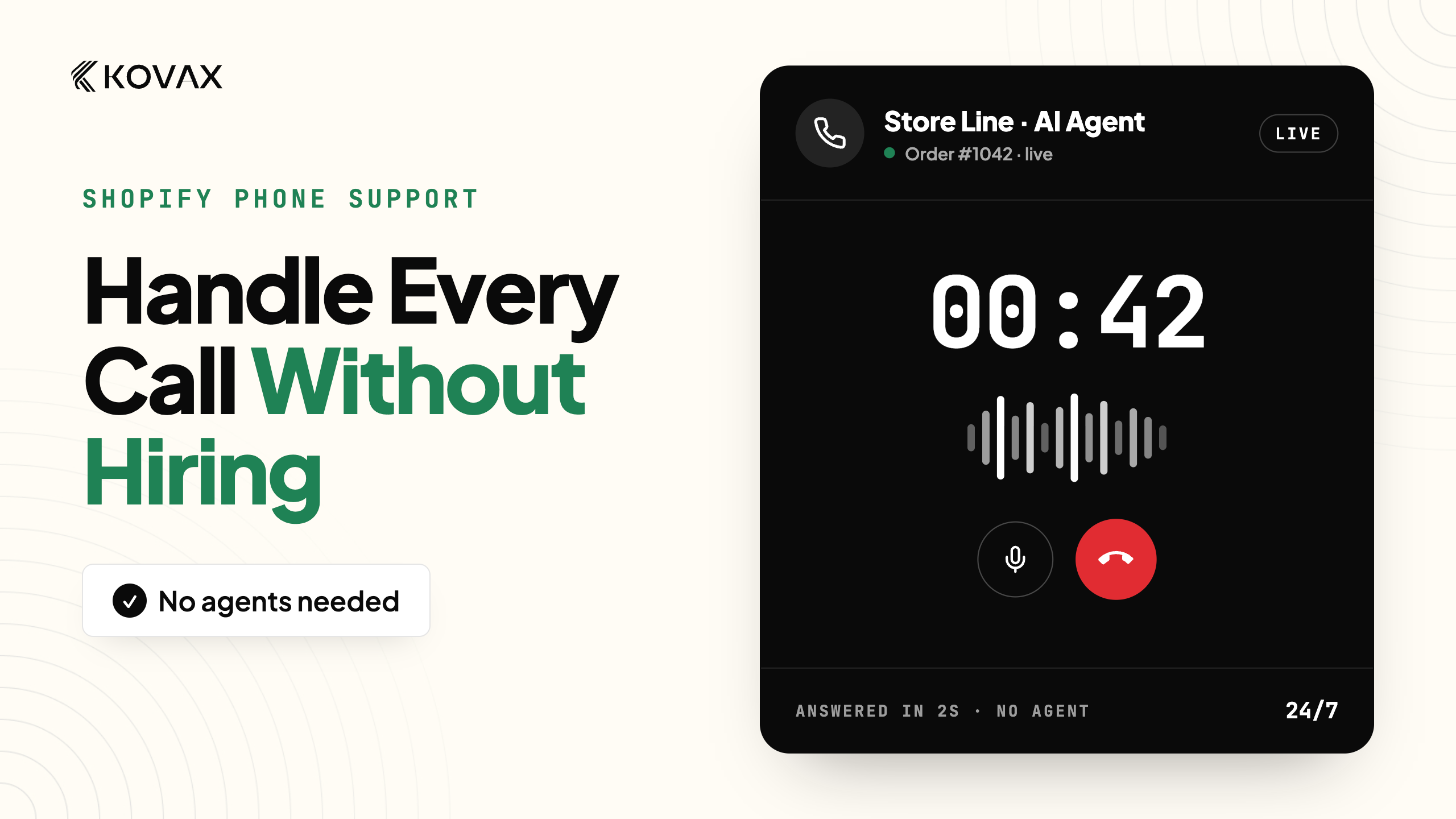
Kovax's voice agents, for example, handle inbound and outbound Shopify calls 24/7 in 20 plus languages, with no code setup, and pull live order and product data straight from Shopify, as shown on the Kovax solutions page. On the support side, around 80% of inbound calls get resolved without a human stepping in. For a store, that means a German or Spanish caller at 2 a.m. gets a real answer, not a voicemail.
The proof shows up in cost. In the Eeveve case study, a baby and kids brand moved from about 4,000 dollars a month in fixed support cost to zero, and cost per call dropped from 26.67 dollars to under 4 dollars, while 85 to 90% of calls got automated. That is the shift: multilingual customer care used to scale with headcount, and now it can scale with software.
This is not only a phone story. For the wider view of automated help across channels, see the guides on conversational AI for ecommerce and customer service automation.
Common multi-language customer service mistakes to avoid
Even stores that invest in this get a few things wrong. Watch for these.
- Translating the store but not the support. The most common miss. The homepage is perfect, the support reply is English.
- One channel only. Great chat, but the phone and WhatsApp still fail in other languages.
- Trusting raw machine output. No glossary, no review, so the tone reads robotic in the customer's language.
- Ignoring after hours. A market in another time zone gets silence for half its day.
- Adding every language at once. Spreading thin across ten languages beats doing two well. Start with markets that already buy.
Good multi-language customer service is less about speaking every language on earth and more about fully covering the few your customers actually use.
Frequently asked questions
What is multilingual customer support?
It is customer help delivered in the shopper's own language across every channel you offer, from the first question through the after sale follow up. It goes beyond a translated storefront and covers chat, email, phone, and messaging.
Is Shopify multilingual by default?
Shopify can publish your store in up to 20 languages on most plans and up to 30 on Shopify Plus, with checkout pre translated into 33 languages. That covers the storefront. It does not answer your support tickets or calls, which you set up separately.
What is the difference between shopify localization and translation?
Translation swaps words from one language to another. Shopify localization goes further and adapts currency, sizing, tone, and checkout to feel native for that market. Localization sets up the store, support handles the conversation after.
Do I need a multilingual call center?
Only if you get real phone volume in other languages. A traditional multilingual call center works but costs a lot to staff per language. Many Shopify stores now use AI voice agents to cover the phone around the clock at a lower cost.
Can a chatbot handle multi-language customer service?
Yes, for common and repeat questions. A multilingual chatbot is excellent at instant FAQ answers in many languages, 24/7. Hand off the unusual or upset conversations to a human or a capable voice agent.
How many languages should a Shopify store support?
Start with the languages of the markets that already buy from you, usually two or three. Doing a few languages fully beats doing ten of them badly.
The bottom line
Language is not a storefront problem. It is a support problem hiding behind a translated storefront. The stores that win in more than one market are the ones where a shopper can ask a question and get a real answer in their own language, on any channel, at any hour.
If phone support in more languages is your gap, see how Kovax's voice agents cover multilingual phone support.