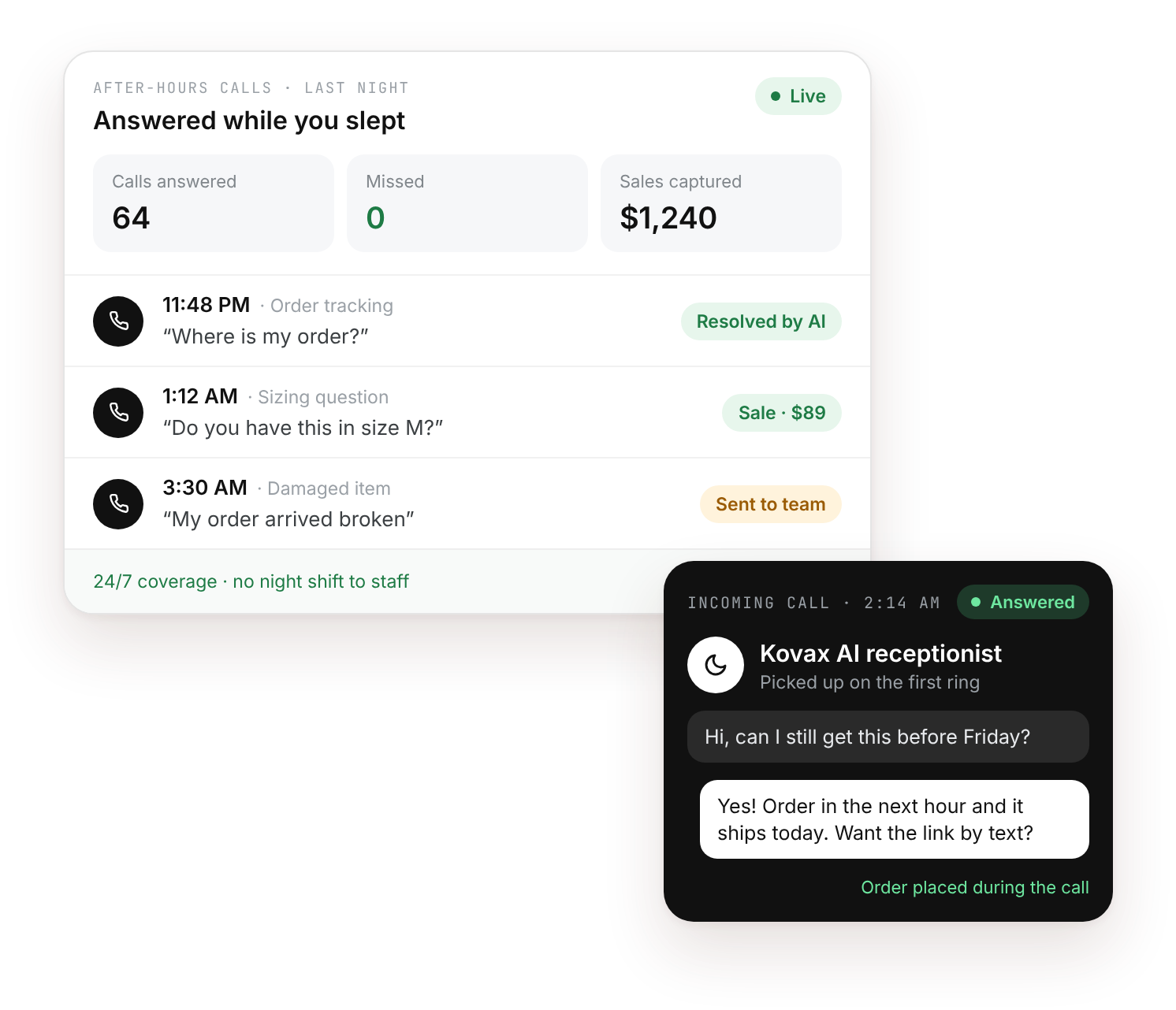
A 24-hour answering service picks up your business phone calls whenever they come in: 24 hours a day, 7 days a week, including weekends and holidays.
Instead of reaching voicemail, your callers immediately hear a friendly, professional greeting using your company's name. The service can then:
- Answer common questions
- Take down detailed messages
- Book appointments on your calendar
- Transfer urgent calls directly to you or your team
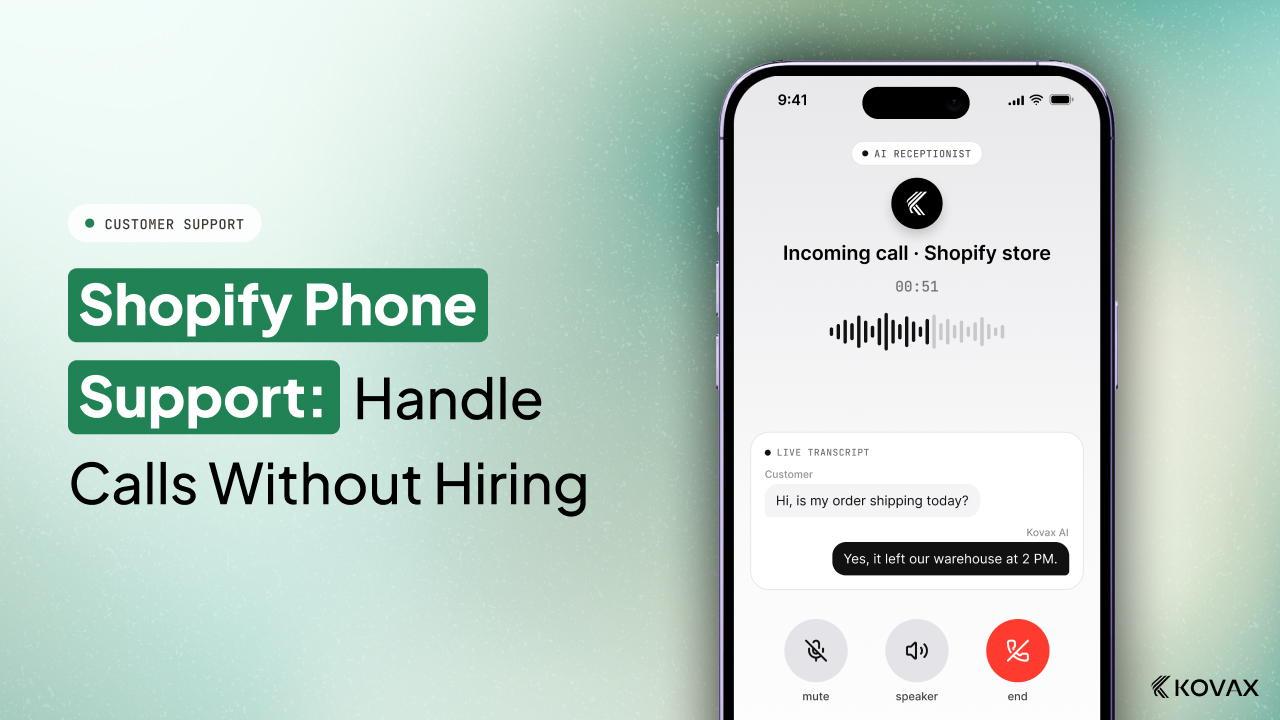
What's changed: In the past, this meant paying human call center agents to work night shifts. Today, smart AI voice agents can answer calls instantly, speak naturally, and pull live details directly from your software (like checking an order status or booking a slot) while on the phone.
How a 24-Hour Answering Service Works
- Routing your calls: Calls to your business number automatically forward to the service, either 24/7, after hours, or when your line is busy.
- Greeting the caller: The caller hears a custom, professional greeting using your exact business name.
- Identifying the need: A live agent follows your tailored script, or an AI agent actively listens to understand what the caller wants.
- Solving or note-taking: Simple questions get answered immediately on the call. Complex requests are saved as a message or support ticket.
- Transferring urgent calls: High-priority or emergency issues are immediately forwarded to your designated on-call staff member.
- Sending call summaries: You receive a complete log, audio recording, or written transcript of every call.
Why Step 4 Makes or Breaks Your Service
Traditional human services can only read static scripts. If a customer asks for a live update, the agent usually says, "I'll pass your message along."
An AI answering service connects directly to your backend software (like your order or inventory system). This means it can check real-time data mid-call and instantly answer specific questions, like tracking a package, checking product availability, or confirming an account balance, without leaving the caller on hold.
Types of 24-Hour Answering Services
| Type | Who Answers | Best For | Main Limit |
|---|---|---|---|
| Live Answering Service | Trained human agents in shifts | Emotional or complex calls | Costs rise with every minute |
| After-Hours Answering Service | Humans or AI (outside business hours only) | Teams that cover the day in-house | Handoff gaps between shifts |
| AI Answering Service | AI voice agent | High volumes of repeat questions | Edge cases still need a person |
| Hybrid | AI first, humans for escalations | Most growing businesses | Needs clear routing rules |
1. Live Answering Service
Uses real human agents in a shared call center to answer calls for your business.
- Pros: Offers empathy, a personal touch, and human judgment.
- Cons: Expensive. Agents work from basic scripts, rarely have access to live account data, and often end calls with "I will pass your message along."
2. After-Hours Answering Service
Steps in only when your internal team goes offline, typically evenings, weekends, and holidays.
- Pros: Keeps daytime support in-house while maintaining coverage overnight.
- Cons: Risk of heavy message backlogs piling up for your team to return the next morning.
3. AI Answering Service
Uses conversational voice AI to speak naturally, understand callers, and respond instantly.
- Pros: Handles many calls at once, operates 24/7 with zero overtime costs, and connects to your live software to resolve requests on the spot.
- Cons: Cannot handle complex, highly emotional situations without escalating to a human.
Key Features to Look For
Before choosing a provider, make sure they offer these 5 essentials:
- True 24/7/365 coverage: Full protection year-round with zero extra fees or reduced staffing on holidays.
- Live data access: Direct integration with your backend software (like Shopify or your CRM) so agents can check real orders, bookings, and account details mid-call.
- Smart call transfers with context: Seamless routing that passes call transcripts to your team. 81% of consumers want agents to continue the conversation without backtracking.
- Recordings and written transcripts: Complete logs for quality checks, staff training, and tracking recurring customer issues.
- Instant scalability for peak volume: The ability to handle unexpected call spikes during flash sales or holidays without long hold times or dropped calls.
Which AI Platform Is Worth the Trial?
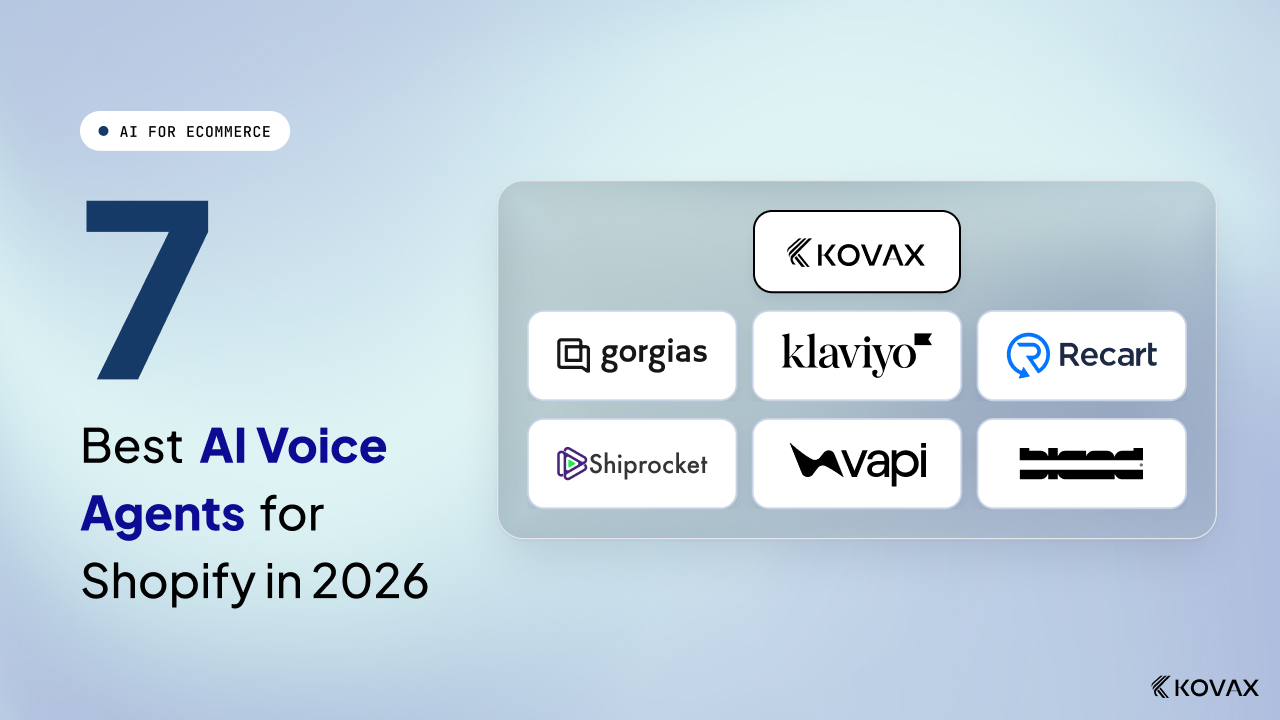
If you run a Shopify store, Kovax is a top contender for your 24-hour answering service.
Unlike general-purpose call services, it is built specifically for Shopify. It connects directly to your store's live order data, product catalog, and policies, which means it can fully resolve tracking updates and return requests on the spot rather than just taking a message.
Key highlights:
- Shopify-native integration: Fetches live order, policy, and product data instantly during calls.
- Smart handoffs: Transfers complex calls to your human team with complete transcripts and caller context.
- Omnichannel and multilingual: Unifies voice, WhatsApp, SMS, and email in a single app, with support for 16 languages (including Hindi, Spanish, and French).
- Enterprise security: SOC 2 Type II compliant, GDPR-ready, and PCI DSS certified.
- Risk-free testing: Every paid plan includes a 30-day free trial to test the system on real customer calls before committing.
Can I Use My Existing Phone Numbers and Telephony System?
Yes! You don't need to change your main phone number. Answering services use standard call forwarding, which means your customers keep calling the same number they've always used. You simply set up forwarding rules with your current phone provider, and the service manages the rest.
There are three easy ways to set it up:
- Forward 24/7: The service handles every incoming call, day and night.
- Forward after hours only: Your team answers during normal business hours, and the service takes over at night, on weekends, and during holidays.
- Forward overflow calls: Calls only forward when your line is busy or when your team doesn't pick up within a few rings.
Pro tip: Before choosing a provider, check two things with your carrier: confirm that call forwarding is enabled on your plan, and make sure the service can seamlessly transfer urgent calls back to your team's mobile or landline numbers.
How Long Does It Take to Launch an AI Call Agent?
It depends on the setup you choose:
- Ready-made platform apps (minutes): Pre-built AI agents sync directly with your existing setup. For example, Shopify apps like Kovax connect your product catalog, orders, and store policies automatically, and most merchants go live within 5 minutes.
- Traditional live services (days): Human call centers usually take a few days to write scripts, train shift agents, and run test calls before launching.
- Custom enterprise builds (weeks): Complex AI setups that require custom code to connect multiple internal databases take several weeks to build and test thoroughly.
Will AI Call Agents Replace Your Human Team?
No. AI is built to assist your team, not replace it. Industry research agrees.
Gartner predicts that by 2027, 50% of companies planning to cut customer service staff will abandon those plans. In fact, 95% of customer service leaders plan to keep their human agents, following a "digital first, but not digital only" strategy.
How the Split Works in Practice
- AI handles the routine work: Package tracking, return policy questions, store hours, and simple order checks.
- Humans handle the high-value work: Upset callers, damaged orders, complex disputes, and VIP customer needs.
By letting AI take care of the repetitive, high-volume calls, your team can focus on solving real problems without burning out.
What Languages Are Supported?
Language support varies widely by provider:
- Live answering services: Usually limited to English and Spanish, often charging extra fees or restricting hours for other languages.
- AI call agents: Support dozens of languages and can automatically detect the caller's language in real time.
When testing AI providers, check three key capabilities:
- Accent handling: How well it understands regional accents.
- Mid-call switching: Whether it can seamlessly switch languages mid-conversation.
- Regional mixes: Support for hybrid languages like Hinglish or Spanglish.
For example, Kovax supports 16 languages, including English, Hindi, Spanish, French, German, Japanese, and Korean.
How Do AI Agents Ensure Compliance and Security?
Any platform handling caller data must follow strict security standards. Look for these baseline measures:
- Security and privacy standards: SOC 2 Type II reports, GDPR compliance for European customers, and PCI DSS compliance for payment processing.
- Data safety: Full encryption for data in transit and at rest.
- Caller protections: Automated call recording disclosures and strict identity verification before sharing sensitive account details.
- Outbound rules: Compliance with regulations like the US Telephone Consumer Protection Act (TCPA), which treats AI voices as "artificial" and requires prior consent for most outbound calls.
Why It Matters for Ecommerce Brands
Online stores operate 24/7 across global time zones, making round-the-clock phone support a huge competitive advantage. After-hours calls are usually predictable:
- Tracking updates ("Where is my order?")
- Return, exchange, and policy inquiries
- Pre-purchase questions about sizing, stock, and shipping
- Payment failures or checkout troubleshooting
- Cash on delivery (COD) order confirmations
Answering these instantly at 2 a.m. prevents lost sales, reduces support tickets, and avoids negative reviews.
How Much Does It Cost?
Pricing generally falls into three models:
- Per minute: Common for live answering services (often includes hidden rounding fees and transfer surcharges).
- Per call: Common for traditional virtual receptionists.
- Monthly base plus usage: Standard for AI platforms.
In-house 24/7 coverage is the most expensive route, requiring at least three full shifts plus holiday coverage. AI platforms offer the lowest-cost entry point. For example, Kovax plans start at $49.99/month with inbound and outbound AI calls included.
Frequently Asked Questions
What is the difference between a 24-hour answering service and an after-hours answering service?
A 24-hour service answers every incoming call around the clock, day and night. An after-hours service only takes over when your internal team goes offline, typically during evenings, weekends, and holidays.
Is round-the-clock call coverage worth it for a small business?
Yes. Small teams often miss calls because staff are tied up with other work. Modern AI answering services cost significantly less than a single part-time hire while delivering 24/7/365 coverage on a small-business budget.
What happens if the AI cannot answer a question?
It escalates the call. A properly configured AI agent will transfer the caller directly to an on-call team member or take down a detailed message and create a support ticket, passing along the full conversation log so the customer never has to repeat themselves.
Do I need a phone answering service if I already offer live chat?
Yes. Many customers prefer calling when an issue is urgent, high-value, or too complex for live chat. Offering both phone and chat coverage ensures you capture every customer preference.