The short answer: the best Gupshup alternative for a Shopify store depends on one question. Do you want to send messages, or do you want to talk with shoppers? Gupshup is built to send messages, mostly on WhatsApp. Kovax is built for Shopify and starts with a phone call, then follows up on WhatsApp, text, and email.
Picture this. A shopper puts a $60 order in her cart, then gets a call from her boss and closes the tab. Your store sends a WhatsApp reminder. She sees it later, swipes it away, and forgets. Now picture a second ending: two minutes after she leaves, a friendly voice calls, answers her one question about sizing, and texts her a checkout link while she is still on the phone. She buys.
That second ending is what Kovax does. This guide compares Gupshup vs Kovax side by side, with real numbers from real Shopify stores, so you can pick the right one for yours.
Why Do Shopify Stores Look for Gupshup Alternatives?
Most stores start looking at Gupshup alternatives for three reasons: messages get read but not answered, the bill is hard to predict, and Gupshup is not built just for Shopify.
1. Messages are easy to put off. Think about your own phone: unread brand messages pile up, and a reminder can sit there for days. A call asks for an answer right now.
2. The bill comes in two parts. You pay Gupshup a small fee per message. Then Meta, the company that owns WhatsApp, adds its own fee. Meta's fee changes based on the kind of message and the country your customer lives in, so your monthly cost can be hard to guess.
3. Gupshup serves every kind of business. Its customers include banks, phone companies, and giant apps. A Shopify store is one small group among many. It is a bit like hiring a moving truck to carry one box. It works, but the truck was built for a much bigger job.
None of this makes Gupshup a bad tool. It just means some Shopify stores need something more focused.
Gupshup vs Kovax at a Glance
Gupshup is a messaging tool for businesses of every size. Kovax is a Shopify-only assistant that leads with phone calls. The table shows the full Gupshup vs Kovax picture.
| Question | Gupshup | Kovax |
|---|---|---|
| Who is it built for? | Businesses of every type and size | Shopify stores only |
| How does it reach shoppers first? | WhatsApp messages | Phone calls, then WhatsApp |
| Other ways to reach shoppers | Text messages, Instagram, newer picture-style texts | WhatsApp, text messages, email, website chat |
| Wins back shoppers who left their cart? | Yes, with a WhatsApp reminder | Yes, with a phone call and a WhatsApp follow-up |
| Answers your store's phone? | Not a main feature of its Shopify app | Yes, 24 hours a day |
| Checks cash-on-delivery orders before shipping? | Not listed on its Shopify app | Yes, with a quick phone call |
| Languages the assistant speaks | Not listed on its Shopify app | 20+, including Hindi |
| Shopify reviews | 5.0 stars from 1 review | 5.0 stars from 3 reviews |
| How you pay | Small fee per message, plus Meta's WhatsApp fee | Monthly plan with a set price per call minute and per message |
| Best for | Big companies sending lots of messages | Shopify stores that want to win back sales and stop wasted deliveries |
What Does Gupshup Do Well?
Gupshup is very good at one big job: sending huge numbers of messages to people in many countries.
- It is huge. Gupshup says it has 50,000+ customers in 130+ countries and handles 120 billion conversations a year, for brands like Netflix, HSBC, and Flipkart.
- Meta trusts it. Gupshup has been named Meta Partner of the Year more than once.
- It covers many apps. Besides WhatsApp, it sends regular text messages, Instagram messages, and a newer kind of text that can show photos and buttons.
Its Shopify app, Gupshup: WhatsApp Marketing, launched in March 2023 and is free to install. It can send cart reminders on WhatsApp, send order updates shoppers can reply to, send different offers to different groups of shoppers, run a chat assistant for product questions, and help with returns and tracking.
If your store mostly needs to send updates and offers, Gupshup does that job well.
How Is Kovax Different From Gupshup?
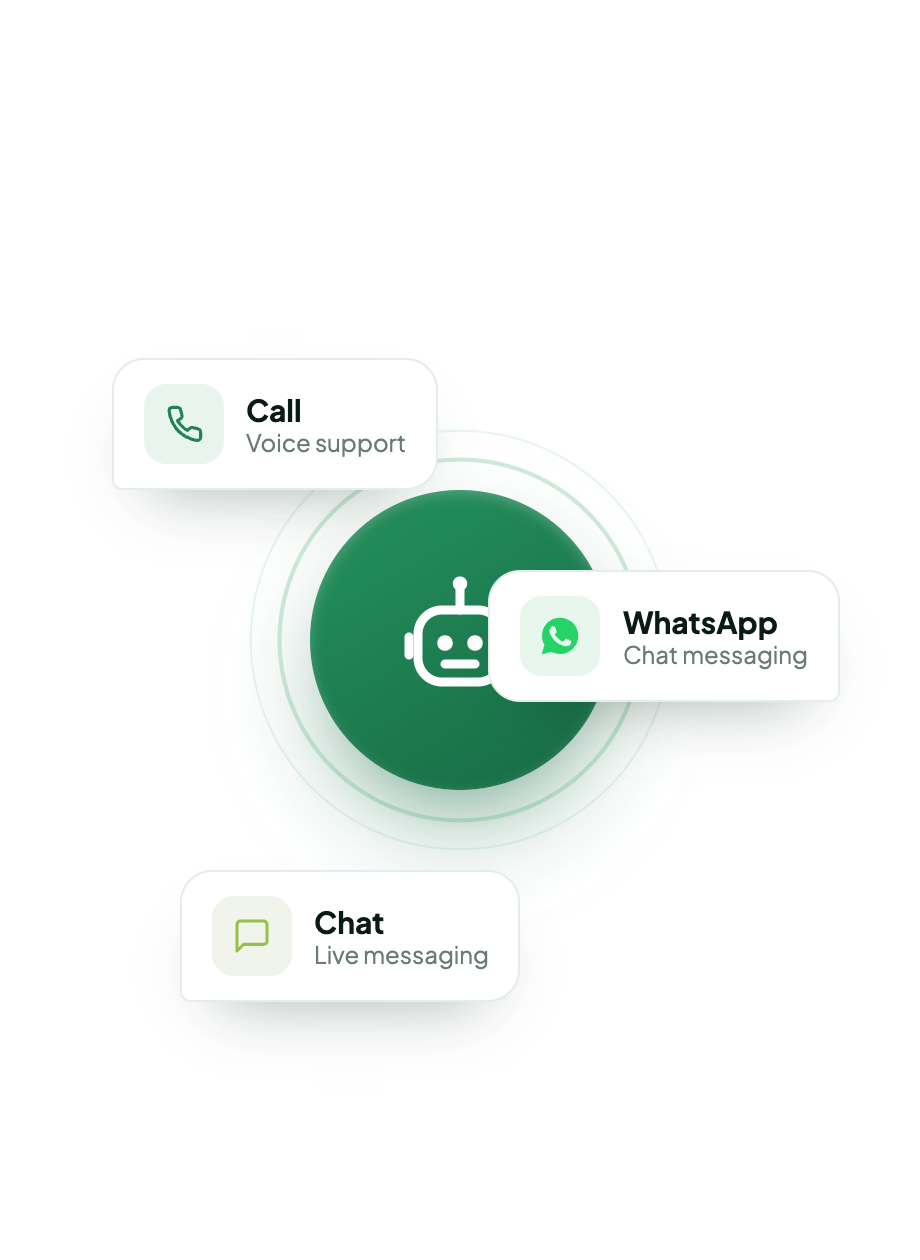
Gupshup sends messages. Kovax makes phone calls. Kovax's voice assistant knows your products, talks with shoppers in real time, and then uses WhatsApp, text, and email to follow up. Each difference below comes with a real store that proves it.
1. Kovax calls shoppers who leave their cart
When someone leaves checkout, Kovax calls them within minutes, answers their questions, and can text a checkout link while still on the call.
Proof from Monster Piercing. This UK body jewellery store used email reminders, and only 8% of shoppers came back. As the team put it, "Most of our customers in the UK just don't open marketing emails the way you'd hope." After adding Kovax calls with a WhatsApp follow-up, the results were:
- Won-back carts rose from 8% to 19%, which is 2.4 times better
- 8 out of 12 calls turned straight into orders
- 90% of WhatsApp follow-ups were delivered and 77% were read
- Nobody on the team had to chase lost carts by hand anymore
One note to keep this fair: that test compared Kovax with email, not with Gupshup. It shows how much a phone call adds on top of messages.
2. Kovax answers your store's phone
Gupshup's Shopify app is built around messages. Kovax also picks up your store's phone day and night.
Proof from Eeveve. This baby play mat brand paid $4,000 a month for one person to answer about 150 calls a month. That is roughly 5 calls a day, so most of the shift was spent waiting. After Kovax:
- Fixed phone support cost went from $4,000 a month to $0
- Cost per call fell from $26.67 to under $4
- The assistant handled 85 to 90% of calls by itself
- Eeveve saved $48,000 a year
The founder said: "We were paying $4K a month for someone to sit by the phone and take maybe 5 calls a day. Now the AI handles almost all of them, even the tricky ones."
3. Kovax checks cash-on-delivery orders before they ship
With cash on delivery, the shopper pays when the parcel arrives. Some shoppers change their mind and refuse the parcel at the door. The store pays shipping both ways and makes nothing. (Our guide to returned parcels in eCommerce shows how fast that adds up.)
Kovax calls each cash-on-delivery shopper within minutes of the order, checks the address, and asks if they still want it. Orders with a "yes" ship. The rest are held. Kovax reports this confirms 95% of cash-on-delivery orders and cuts returned parcels by 50%. Gupshup's Shopify app does not list this kind of check.
4. Kovax speaks your customer's language
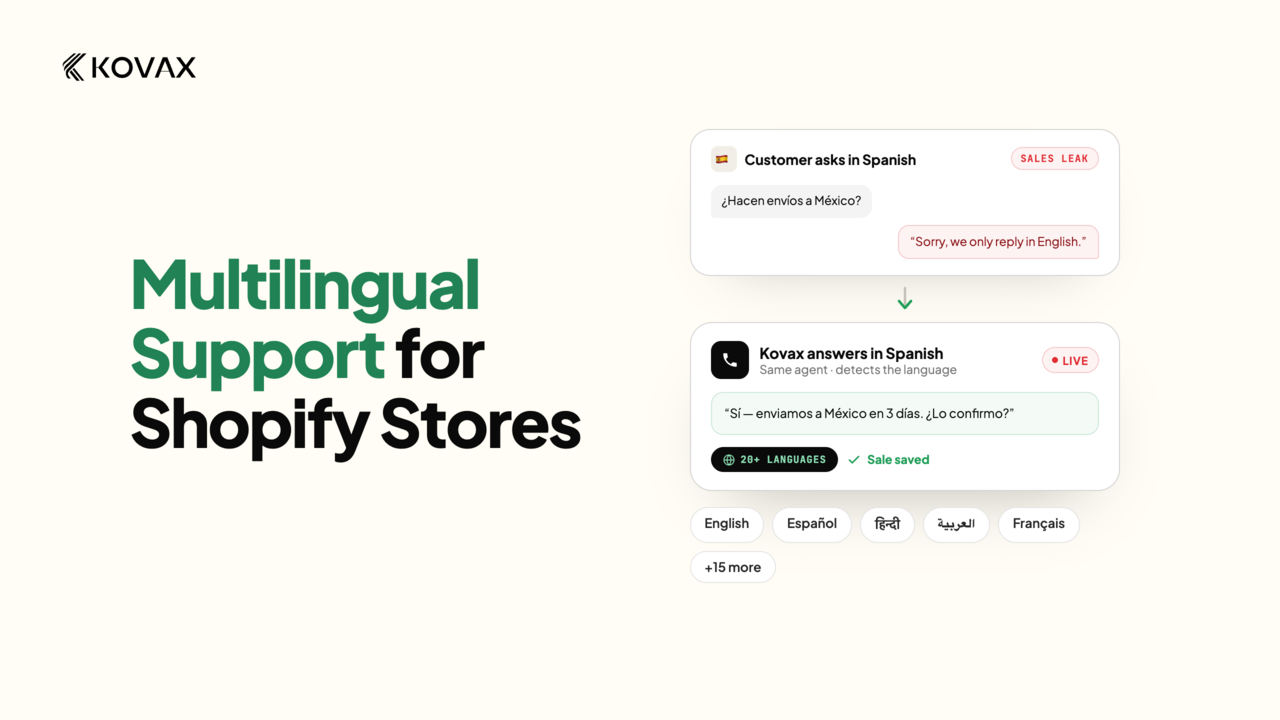
Kovax's assistant talks in 20+ languages, including Hindi, at any hour.
Proof from eSkinStore. This Canadian skincare store ships to 20+ countries but had just one support person, so calls from other time zones went to voicemail. With Kovax, the store now answers 100% of calls, has handled 1,400+ calls in total, and has saved more than CAD 31,000 in orders that were at risk, all with the same one support person.
Gupshup Pricing vs Kovax Pricing
Gupshup charges a tiny fee per message plus Meta's own fee. Kovax charges a monthly plan with a set price for each call minute and message.
How Gupshup pricing works
Think of Gupshup pricing like a pizza where the base and the toppings are billed separately.
- The base: Gupshup charges $0.001 per message, for both messages you send first (like order updates) and replies during a chat.
- The toppings: Meta has charged per message since July 1, 2025. The price depends on the type of message (sales offers, order updates, or login codes) and the country of the person getting it. Some replies to customer questions are free.
So the honest answer on Gupshup WhatsApp pricing is this: Gupshup's part is fixed, but Meta's part depends on who you are messaging. The same is true for Gupshup WhatsApp API pricing, which is what businesses pay when they connect their own software to WhatsApp through Gupshup instead of using the Shopify app. Gupshup also lists WhatsApp calls at $0.0001 per second, and large companies can ask for a custom price.
Quick math: send 10,000 order updates in a month, and Gupshup's part is 10,000 × $0.001 = $10. Your real total is $10 plus Meta's fee, and the Meta part is the one people forget to plan for.
How Kovax pricing works
Kovax pricing is one monthly plan with a set rate for each type of contact, and you can start free.
| Plan | Monthly price | Phone calls | WhatsApp offers | WhatsApp order updates | Text messages |
|---|---|---|---|---|---|
| Free | $0 | 50+ calls to start | — | — | — |
| Starter | $49.99 | 30¢ per minute | 1¢ each | 0.2¢ each | 3¢ each |
| Growth | $199.99 | 27¢ per minute | 1¢ each | 0.2¢ each | 2¢ each |
| Ultimate | $399.99 | 25¢ per minute | 1¢ each | 0.2¢ each | 1¢ each |
Quick math: on Starter, $49.99 equals about 166 minutes of calls. If each order-check call takes about a minute, that is around 166 orders checked before they ship.
Which one costs less?
Per message, Gupshup costs less. But a message and a phone call do different jobs, so the better question is: "How much does each saved sale cost me?" At Eeveve, the cost of each call fell from $26.67 to under $4. At Monster Piercing, 8 of 12 calls became orders. When one call can bring back a sale, the price of the call matters far less than what it earns.
Want to see what this could look like for your own store? The free Kovax ROI calculator shows it in about a minute.
What Do Shopify Reviews Say?
Both apps are new on the Shopify App Store, so neither has many reviews yet.
- Gupshup has 5.0 stars from 1 review, posted by CandlesbyKash in India on July 30, 2026: "Love the integration! Very smooth." That tells us setup was easy. But the reviewer had used the app for just 1 minute, so it says nothing about sales.
- Kovax has 5.0 stars from 3 reviews.
With so few reviews on either side, real before-and-after numbers are a better guide. For Kovax, those are Monster Piercing's jump from 8% to 19% in won-back carts, Eeveve's $48,000 yearly saving, and eSkinStore's 100% call answer rate.
What Are Other Gupshup Alternatives?
Besides Kovax, most stores comparing Gupshup alternatives look at WhatsApp-first tools. These suit you if messages, not calls, are your main need.
| Tool | Main focus | Starting price | Good fit if |
|---|---|---|---|
| Kovax | Phone calls first, then WhatsApp, text, and email, for Shopify only | Free, then $49.99/month | You want calls that win back carts, check cash-on-delivery orders, and answer your phone |
| Interakt | Selling and chatting on WhatsApp | Free trial, then $41/month on Shopify (4.3 stars, 297 reviews) | You want to send product catalogs and offers on WhatsApp |
| Wati | WhatsApp messaging, chatbots, and a shared team inbox | ₹2,499/month, billed yearly, plus message fees | Your team answers lots of WhatsApp chats together |
| AiSensy | WhatsApp marketing, chatbots, and AI chat agents | See pricing page | You mainly send WhatsApp campaigns in India |
For more WhatsApp-first options, see our list of the best WhatsApp marketing apps and our BiteSpeed vs Kovax comparison.
Gupshup or Kovax: Which One Should You Pick?
Pick Gupshup if your main job is sending messages at scale. Pick Kovax if your main job is turning more shoppers into buyers on Shopify.
Gupshup may be the better fit if:
- You are a large company sending millions of messages
- You mainly send updates and offers, not conversations
- You need regular text messages in many countries
- You want the lowest possible price per message
Kovax may be the better fit if:
- You run a Shopify store and want a tool made only for Shopify
- Shoppers leave their carts and your reminders get ignored
- You want your store's phone answered day and night without hiring
- You sell with cash on delivery and refused parcels eat your profit
- Your customers speak different languages
Try this today: open your last 20 abandoned carts and ask, "Would a friendly 1-minute call have brought some of these back?" If yes, Kovax is worth a try. If most of your work is sending updates and offers, Gupshup may be all you need.
How to Switch From Gupshup to Kovax
Switching takes 3 steps and a few minutes, with no code.
- Connect your store. Install Kovax from the Shopify App Store. It is one-click setup.
- Let the assistant learn. Kovax reads your products, policies, and store details on its own, so it can answer shopper questions in your voice.
- Go live. Turn on the calls you want first, such as cart recovery, cash-on-delivery checks, or answering your store's phone.
You also do not have to drop Gupshup on day one. They are separate Shopify apps, so you can keep Gupshup for big WhatsApp campaigns while Kovax handles phone calls, then decide once you see your own numbers.
Frequently Asked Questions
What is the best Gupshup alternative for Shopify stores?
Kovax is a strong Gupshup alternative for Shopify stores that want phone calls, not just messages. It calls shoppers who leave their cart, answers the store's phone, and checks cash-on-delivery orders before they ship. Stores that only want WhatsApp messages also compare tools like Wati, AiSensy, and Interakt, which is why searches like "Wati vs Gupshup" are common.
What is the main difference between Gupshup and Kovax?
Gupshup sends messages, mainly on WhatsApp, for businesses of every size. Kovax is made only for Shopify and starts with a phone call, then follows up on WhatsApp, text, and email. In short, Gupshup is built to send messages at scale, while Kovax is built to talk with shoppers and win back sales.
How much does Gupshup cost?
Gupshup's Shopify app is free to install, with a charge for each message. Gupshup's own charge is $0.001 per message, and Meta adds a separate WhatsApp charge that depends on the message type and the customer's country. Very large companies can ask for custom pricing.
How much does Kovax cost?
Kovax is free to install with 50+ calls to start. Paid plans are $49.99, $199.99, and $399.99 a month. Phone calls cost 25¢ to 30¢ per minute, and WhatsApp offers cost 1¢ each.
Is a phone call really better than a WhatsApp message?
For winning back shoppers, often yes. A phone call asks for an answer right away, and the shopper can ask questions and get replies on the spot. At Monster Piercing, adding Kovax calls with a WhatsApp follow-up raised won-back carts from 8% (with email) to 19%, and 8 of 12 calls became orders.
Can I use Gupshup and Kovax together?
Yes. They are separate Shopify apps, so you can keep Gupshup for large WhatsApp campaigns and add Kovax for phone calls that win back carts, check cash-on-delivery orders, and answer your store's phone.
Do I need a tech person to set up Kovax?
No. Kovax installs from the Shopify App Store in one click and learns your products and policies on its own. Setup takes 3 steps and a few minutes, with no code.
The Final Word
When you compare Gupshup vs Kovax, you are choosing between two different jobs. Gupshup is a giant, trusted tool for sending lots of messages. Kovax is a Shopify-only assistant that picks up the phone, and stores like Monster Piercing, Eeveve, and eSkinStore have used it to win back more sales, cut support costs, and stop losing orders.
If you are exploring Gupshup alternatives because your messages get seen but not answered, try a phone call first. You can start Kovax free on Shopify with 50+ calls included.