Saving $4,000/Month: How Eeveve Cut Cost-Per-Call from $26.67 to Under $4 Using Voice AI
Eeveve removed an 8-hour daily support shift and replaced it with Voice AI — cutting cost-per-call by 85% and saving $48,000/year.

With roughly 150 calls per month, the company had been spending $4,000 in fixed payroll for availability rather than output. After deploying Voice AI, that fixed expense disappeared. In its place: a scalable support system that now handles 85–90% of inbound calls autonomously, delivers structured performance reporting, and generates measurable gains in lead conversion.
This wasn't a surface-level automation experiment. It was a structural shift in how customer support economics were designed.
The Challenge: High Fixed Cost, Modest Volume
Eeveve builds premium, design-forward baby play mats for modern families who care about safety as much as aesthetics. Their customers aren't impulse buyers. They are intentional. They ask questions before they purchase.

Typical customer questions:
- Is it safe for newborns?
- How thick is the cushioning compared to alternatives?
- Will this work with oak flooring?
- Does it blend into a minimalist living space without looking bulky?
These are contextual buying decisions. They require thoughtful responses, not templated scripts.
But while the product demanded depth, the call volume didn't justify full-time staffing.
At approximately 150 calls per month, Eeveve was maintaining an 8-hour daily support shift that cost $4,000 monthly. That breaks down to:
$26.67
cost per call — $4,000 ÷ 150 calls
In practical terms, that meant roughly five calls per day spread across eight paid hours.
The support team wasn't underperforming. They were underutilized. The company was paying for presence rather than productivity.
Over time, this created a familiar but dangerous pattern:
- Fixed overhead that didn't flex with demand
- Payroll waste during low-call windows
- No after-hours coverage
- Costs that would scale linearly with hiring
- Limited visibility into inquiry trends
Nothing was broken operationally. The issue was structural inefficiency.
The Strategic Shift: Rethinking the Cost Model
Eeveve didn't adopt automation because volume was overwhelming. They adopted it because the economics didn't make sense.
The decision wasn't between human support and no support. It was between fixed payroll and scalable infrastructure.
They chose Voice AI over chatbots for one key reason: conversational depth.
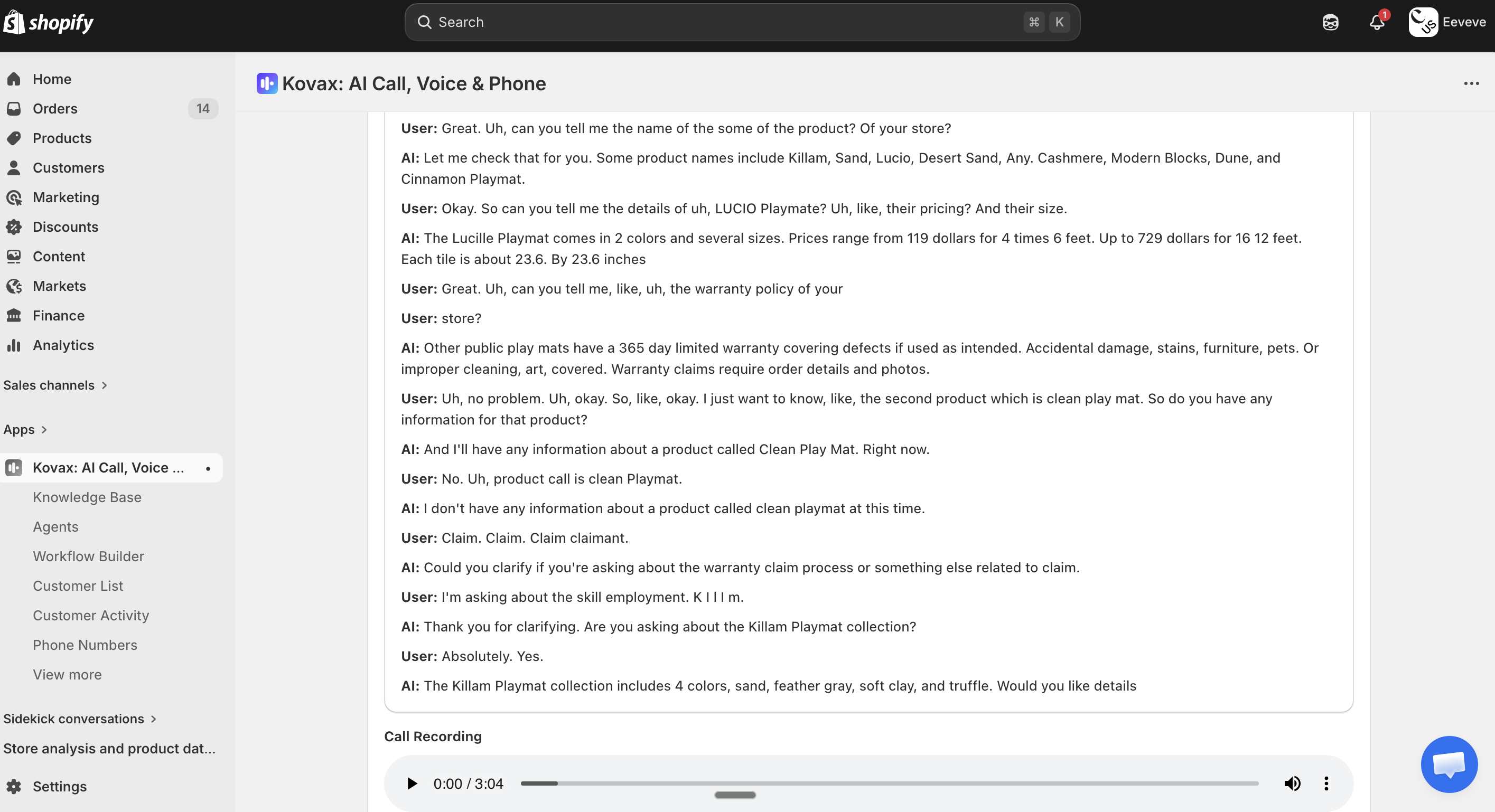
At one point, a customer called to ask whether the play mats would visually integrate into a Scandinavian-style living room with oak flooring and neutral textiles. That's not a typical FAQ. It's a design conversation. It requires context, tone, and nuance.
The support solution needed to:
- Understand layered questions
- Clarify intent naturally
- Maintain brand voice
- Capture structured inquiry data
Voice AI delivered that conversational flexibility while removing idle payroll overhead.
Low call volume doesn't eliminate inefficiency. In fact, when staffing is fixed, modest volume can magnify it. Every quiet hour becomes expensive.
By implementing Voice AI, Eeveve introduced:
- 24/7 availability
- A usage-aligned cost structure
- No idle staffing expense
- Intelligent contextual handling
- Structured lead capture and reporting
They didn't remove support. They replaced a fixed expense with a scalable system aligned to demand.
Implementation: Methodical, Not Rushed
The transition followed a structured rollout rather than a reactive replacement.
Support Audit
The team reviewed monthly call data to identify recurring themes and contextual edge cases.
Cost Analysis
By calculating the true cost-per-call at $26.67 and mapping idle staffing windows, the inefficiency became quantifiable rather than theoretical.
Workflow Mapping
Inquiries were categorized into product specifications, safety and materials, availability, shipping timelines, and interior compatibility discussions. This ensured the AI agent would reflect real customer intent rather than generic responses.
AI Training & Integration
The Voice AI system was trained on product data, store policies, tone guidelines, and integrated with inquiry tagging tools. Context calibration focused especially on design-heavy conversations, where nuance mattered most.
Soft Launch
Performance monitoring began — autonomy rates, response clarity, and conversational flow were reviewed before broader deployment.
Optimization
Final details were refined — strengthening follow-up prompts and improving structured lead capture logic.
What Needed Adjustment
The first iteration wasn't flawless.
Some contextual answers were initially too concise for design-driven conversations. Certain follow-ups lacked personalization depth. Inquiry tagging required tighter logic to ensure reporting accuracy.
These weren't systemic failures — they were calibration issues.
By expanding scenario-based training and improving conversational branching, the team increased both accuracy and engagement quality. After optimization, automation stabilized at 85–90% autonomous handling.
The system became both reliable and brand-aligned.
The Results: Defined by Numbers
The transformation is clearest in the metrics.
Monthly Support Cost
$4,000 fixed payroll
$0 fixed
Cost Per Call
$26.67
Under $4
Automation Rate
No AI / Manual Only
85–90% of calls
Lead Capture
Baseline
+18% conversion
After-Hours
None
24/7 Coverage
Annual Savings
From eliminated payroll
$48,000
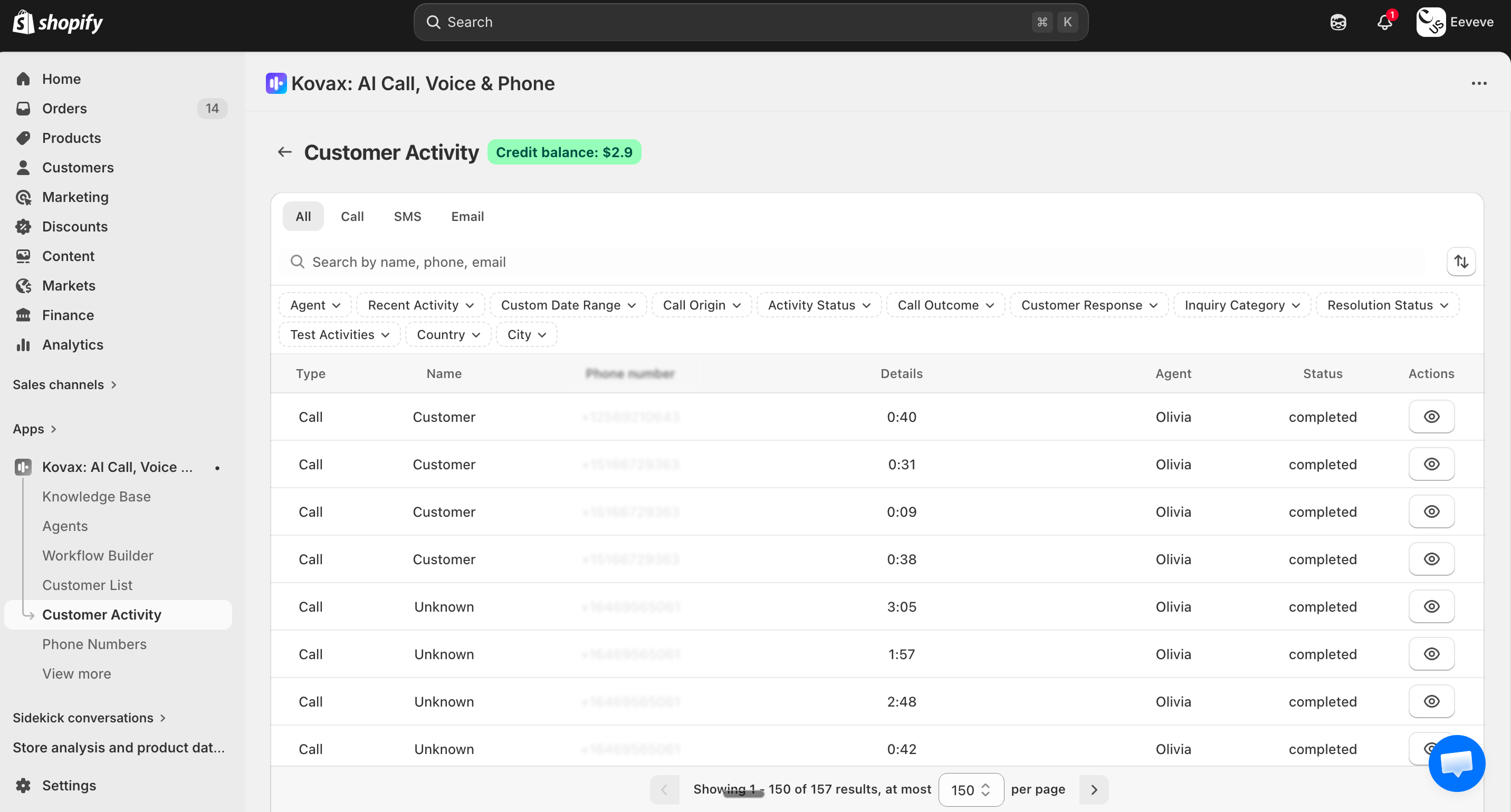
The 18% increase in lead capture conversion came from combining conversational engagement with structured inquiry capture inside the app. Instead of ending as isolated conversations, calls became categorized opportunities tied to measurable outcomes.
Structured daily, weekly, and monthly reports replaced manual tracking. Support shifted from reactive cost center to trackable revenue contributor.
Business Impact
The cost-per-call reduction alone represents an 85%+ improvement in unit economics.
Before
$26.67
per call
After
Under $4
per call
That shift fundamentally changes how support scales. Meanwhile, the 18% increase in lead capture conversion expands qualified pipeline without increasing ad spend or traffic. The same 150 monthly calls now produce more structured opportunities.
Scalability improves immediately:
- Call volume can grow without proportional payroll growth
- After-hours inquiries are no longer missed
- Reporting reveals patterns and trends over time
Operational clarity increases. Margins expand. Flexibility improves.
The Transformation
Eeveve wasn't underperforming. They were operating within a cost structure that no longer matched demand.
| Metric | They replaced | With |
|---|---|---|
| Availability Cost | $4,000 monthly | $0 fixed |
| Unit Economics | $26.67 cost-per-call | Under $4 cost-per-call |
| Call Handling | Manual | 85–90% autonomous |
| Tracking | Manual reporting | Structured performance transparency |
Support didn't disappear. It evolved into infrastructure.
For Shopify & DTC Founders
If payroll remains fixed while call volume fluctuates, inefficiency compounds quietly.
If your cost-per-call sits above single digits, margin erosion is happening whether you see it or not.
If availability costs more than performance, the structure needs redesigning.
Eeveve addressed the structural issue — not just the symptoms.
Every month you delay is another $4,000 burned on idle availability.
Customer Review
In Eeveve's own words
“We were paying $4K a month for someone to sit by the phone and take maybe 5 calls a day. Now the AI handles almost all of them — even the tricky ones. Honestly didn't expect it to work this well.”
Founder
Eeveve
Ready to see results like this?
See how Kovax can transform your Shopify store — just like Eeveve.