What an Ecommerce Chatbot Actually Is in 2026
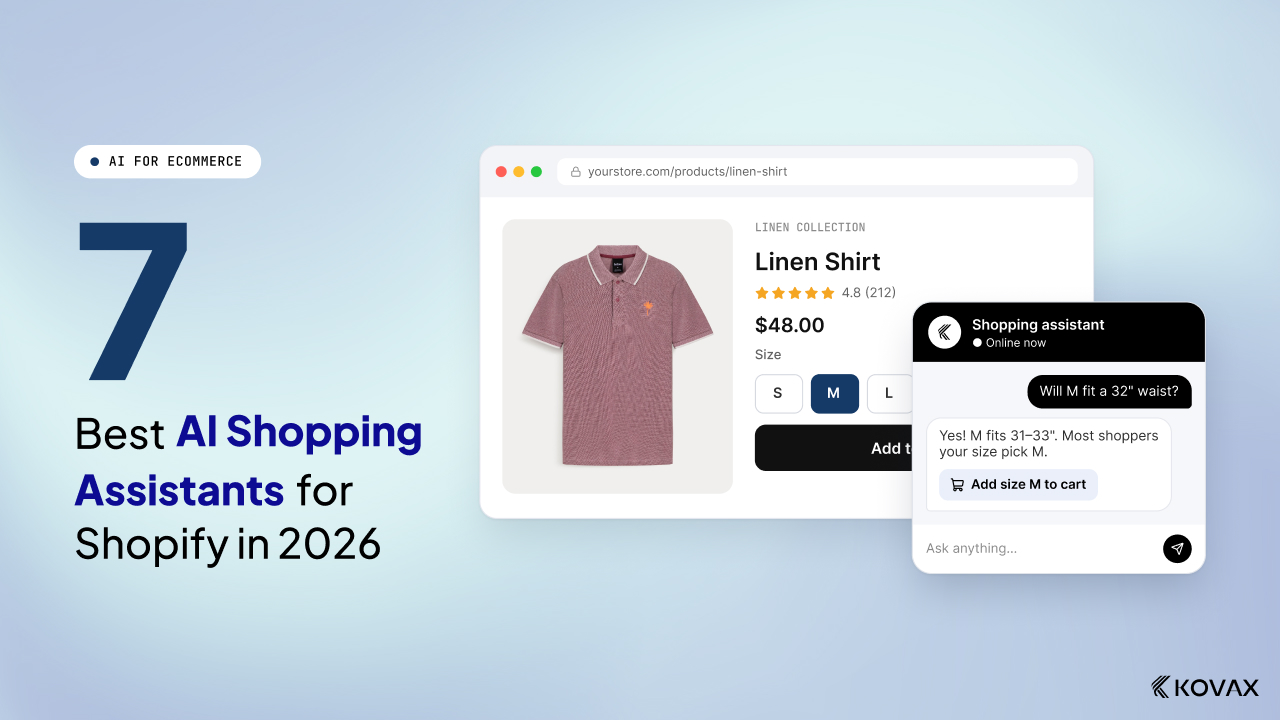
An ecommerce chatbot is software that answers customer questions in a chat window on your store, usually about orders, products, shipping, and returns.
That definition has stayed the same for a decade. What changed is what sits behind the chat window. Until recently, most store chatbots were decision trees: a fixed set of buttons, a fixed set of replies, and a dead end whenever the shopper typed something the tree did not anticipate. Today most of them are built on large language models, which means they generate answers rather than look them up.
This matters when you are shopping for one, because the word chatbot now covers two products that behave nothing alike. One follows a script you wrote. The other reads your catalog and improvises. They fail in completely different ways, and they cost completely different amounts to run.
If you want the wider picture of how automated conversation fits across channels, our guide to conversational artificial intelligence for ecommerce covers that ground. This piece is narrower: how to buy one.
The Three Types, and Why the Label Matters
Rule-based bots. A menu with extra steps. The shopper clicks "Where is my order", the bot asks for an order number, and it returns a tracking link. Cheap, predictable, and completely stuck the moment somebody types a question in their own words. Still a reasonable fit for a store with a narrow catalog and three recurring questions.
Retrieval bots. These search your help pages and product data, then quote what they find. Better coverage than a decision tree, and they rarely invent facts because they are constrained to your own text. The weakness is that they answer the question you documented, not the question the shopper asked.
Agentic bots. These can take actions, not just answer. Look up a live order, start a return, check stock, apply a discount code. This is where most vendor marketing now sits, and it is also where the integration work is real. A bot that promises to process returns is only as good as its connection to your order system.
Ask any vendor which of the three they are selling. The answer determines your setup time, your monthly cost, and the ceiling on what the bot can resolve.
What Shoppers Say They Want From a Chatbot
This is the part worth reading before you sign anything, because the survey data does not flatter the category.
In a study of 2,017 United States adults, 79 percent said they strongly prefer interacting with a human over an artificial intelligence agent, and only 8 percent preferred the reverse. Nearly nine in ten, 89 percent, said companies should always offer the option to speak with a human.
The preference is not uniform, though, and the breakdown is the useful part. Shoppers wanted a human for financial or billing disputes at 85 percent, for troubleshooting a specific product issue at 76 percent, and for pricing questions at 71 percent. They were comfortable using automation for routine transactions such as returning an item, at 59 percent.
Separately, research covering more than 11,000 consumers and business respondents across 22 countries found that 74 percent of consumers now expect service to be available 24 hours a day because of artificial intelligence, and 74 percent are frustrated when they have to repeat information they already gave.
Read those together and the brief writes itself. Shoppers do not want a chatbot instead of a person. They want a chatbot for the boring questions, at 2am, without having to repeat themselves, with a human one click away. A bot that hides the escape hatch is working against the thing customers said they cared most about.
The Questions a Chatbot Handles Well
Four categories cover most of the resolvable volume in a typical store.
Order status. The single largest bucket in ecommerce support and almost entirely mechanical. Our breakdown of what "where is my order" costs a store puts numbers on it.
Product specification questions. Sizing, materials, compatibility, what is in the box. A bot with access to your product data answers these faster than a person reading the same page.
Shipping and returns policy. Fixed answers that change rarely. Ideal automation territory, and the category where shoppers themselves are most comfortable, at 59 percent for returns.
Pre-purchase nudges. Answering the one question standing between a shopper and checkout. This is where a chatbot earns revenue rather than just saving support cost, and it overlaps with the 40 percent of non-browsing cart abandonments that trace back to unexpected costs such as shipping and fees.
Where Chatbots Reliably Fail
Anything with money attached. Refund disputes, double charges, failed payments. Shoppers said they wanted a human for billing disputes at 85 percent, and routing those to a bot is how stores generate angry reviews.
Anything with emotion attached. A damaged item that was a gift. A delivery that missed a birthday. The facts might be simple; the interaction is not.
Anything that needs an exception. Real support is full of judgment calls a policy does not cover. A bot that cannot make an exception will either refuse correctly and frustrate the customer, or invent an exception it has no authority to grant.
Questions your documentation never answered. A generative bot asked something outside its source material will often produce a confident, plausible, wrong answer. This is the failure mode that costs the most, because nobody notices until a customer acts on it.
The handoff itself. The moment a bot passes a conversation to a person is where most implementations break. Losing the transcript, restarting the conversation, or dropping the customer into an unattended inbox undoes whatever the bot saved.
What an Ecommerce Chatbot Costs to Run
Pricing in this category is deliberately hard to compare, but it reduces to three models.
Flat monthly fee. Common with rule-based tools. Predictable and usually cheap. It stops being cheap when the tool cannot handle your volume and you buy a second one.
Per resolution or per conversation. Increasingly the default for generative tools. The catch is the definition of resolution. Some vendors count any conversation the bot ended, whether or not the customer got an answer. Others count only conversations that never reached a human. Ask which, in writing, because the difference can be several times the bill.
Per seat, with automation included. Traditional help desk pricing. Sensible if you already have agents and want automation layered on. Poor value if you have one person doing support part-time.
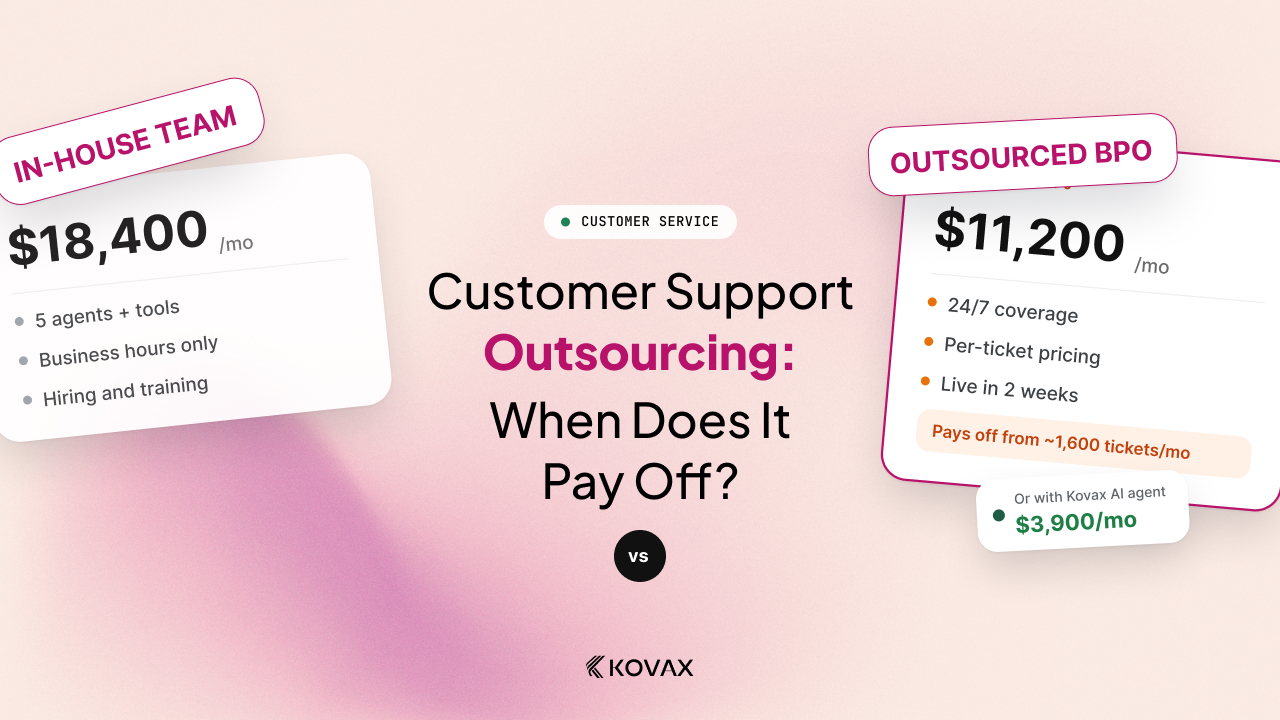
The line item people forget is setup and maintenance. Product data has to be clean, help pages have to be current, and someone has to read transcripts monthly to catch the bot answering wrongly. Budget staff hours for this, not just software cost. We covered the equivalent trade-off for staffed teams in customer support outsourcing for ecommerce.
How to Evaluate a Shopify Chatbot Before You Install It
Six checks, in order of how much trouble they save.
- Ask what it does when it does not know. The only correct answers are that it says so, or it escalates. If the demo cannot show you this, you are buying the expensive failure mode.
- Test it on your ten most common real questions. Not the vendor's script. Pull your last hundred tickets and use the actual wording customers used.
- Check what it can read. Live order data, or a static help centre from launch day? This is the difference between answering "where is my order" and deflecting it.
- Find the human handoff and time it. Count the clicks. If a customer cannot reach a person in one obvious step, expect complaints, given that 89 percent said the option should always exist.
- Ask how it is billed and what counts as a resolution. Get the definition in the contract.
- Ask what happens outside chat. Most stores also get email, phone, and messaging volume. A chat-only tool solves one channel and leaves the rest where they were.
Common Mistakes People Make When Buying a Chatbot
- Buying automation before fixing the underlying problem. If most of your volume is "where is my order", better tracking notifications remove the question entirely, which beats answering it faster.
- Hiding the human option to protect deflection numbers. It improves the metric and damages the relationship, against the 89 percent who expect that option to exist.
- Judging the bot on containment rate alone. A conversation the customer abandoned in frustration counts as contained. Pair it with satisfaction and repeat-contact rate or the number means nothing.
- Letting it answer questions outside its source material. Constrain scope deliberately. A narrow bot that is right beats a broad one that guesses.
- Setting it up once and never reading the transcripts. Catalogues change, policies change, and a bot nobody audits quietly drifts out of date.
A Simple Way to Decide
Look at last month's tickets and count how many were order status, policy, or product specification questions. If that is under about a third of your volume, a chatbot is not your bottleneck and the money is better spent elsewhere.
Ask whether those questions are already answered somewhere reliable. A bot inherits the quality of your documentation. If your shipping policy is vague, automating it just spreads the vagueness faster.
Decide who reads the transcripts. If nobody owns that job, you are buying a tool that will be wrong in six months and nobody will notice. That single answer predicts success better than any feature comparison.
FAQ
What is an ecommerce chatbot?
Software that answers shopper questions in a chat window on your store, most often about order status, products, shipping, and returns. In 2026 the term covers both fixed decision trees and generative tools that read your catalog and produce answers.
Do customers actually like chatbots?
Mostly no, as a replacement. 79 percent of surveyed Americans said they strongly prefer a human. They are more comfortable with automation for routine tasks such as returns, at 59 percent, which is the realistic scope.
Will a chatbot reduce my support costs?
Only for the mechanical share of your volume. Count how many of your tickets are order status and policy questions first, since that fraction is roughly the ceiling on what automation can remove.
Is a chatbot enough on its own?
For a small store with chat-only volume, sometimes. Most stores also receive phone calls and messages, and a chat widget does nothing for those. Our guide to handling Shopify phone volume without hiring covers the other side.
How do I stop a chatbot from giving wrong answers?
Constrain it to your own verified content, instruct it to escalate rather than guess when unsure, and read transcripts on a schedule. Generative tools fail confidently, so the review habit matters more than the initial configuration.
Where to Go From Here
If your volume runs across chat, phone, and messaging rather than chat alone, a single widget only covers part of it. Kovax handles customer questions across channels for Shopify stores, grounded in your own catalog.