WISMO, in 30 seconds
- What it is: WISMO ("Where Is My Order?") is any customer contact just checking on an order they already placed - a pure status question, not a complaint.
- Why it matters: industry benchmarks put WISMO at a third to half of all ecommerce support contacts. For many Shopify stores it's the single biggest ticket category, ahead of returns and sizing.
- The fix: close the information gap before the customer feels it - proactive tracking updates, a clean self-service tracking page, and an AI voice agent for the calls that still come through, including after hours.
Every store owner knows the feeling. A customer buys something, gets the confirmation email, and then goes quiet for exactly as long as it takes for the doubt to creep in. Two days later they're in your inbox, your live chat, or worse, on the phone, asking the same four words your team hears all day: where is my order?
That's WISMO. And if you run a Shopify store, it's probably eating more of your support hours than any other single question. The frustrating part is that most of these tickets are avoidable. The customer isn't angry yet. They just can't see where their package is, so they ask the one team that's supposed to know.
This post covers what WISMO actually means, what it's costing you (in real numbers, not vibes), why it keeps happening, and the specific ways to reduce WISMO calls without hiring three more people for your support desk.
What is WISMO?
WISMO stands for "Where Is My Order?" It's the shorthand support and ecommerce teams use for any customer contact asking about the status of an order that's already been placed. Someone bought something, they're waiting, and they want to know when it's showing up.
The WISMO meaning is simple, but the volume is what gets you. These aren't complaints about a broken product or a wrong size. They're pure status checks. The customer would happily never talk to you at all if they could just see where their stuff was. Every WISMO ticket is basically a customer doing your tracking work for you, then asking you to confirm it.
You'll see WISMO show up as emails, chat messages, DMs on Instagram, and phone calls. WISMO calls in particular are the expensive ones, because a human has to pick up, pull the order, check the carrier, and read it back. More on that cost in a second.
What WISMO costs you
Here's the part most stores underestimate.
Industry benchmarks put WISMO at somewhere between a third and half of all ecommerce customer support contacts. For a lot of Shopify merchants it's the single biggest ticket category, ahead of returns, sizing, and payment issues. So before you've solved a single "real" problem, half your support day is gone answering a question the tracking page already answers.
Now put a number on it. Say a support agent handles a WISMO email in four minutes and a WISMO call in six or seven. If you're getting a few hundred of these a month, that's dozens of hours of paid labor spent reading tracking numbers out loud. Scale that to peak season and it's a second hire you didn't want to make.
Then there's the cost you can't see on a timesheet. A customer who has to chase you for basic order status walks away thinking your store is disorganized, even when the package is perfectly on time. That erodes trust and it chips at brand loyalty. The order arrives fine, but the customer experience already soured two days earlier when they couldn't find out anything on their own.
So WISMO hits you twice. It burns support capacity you're paying for, and it quietly damages how customers feel about buying from you again.
Why WISMO happens
WISMO isn't really a support problem. It's an information gap. The customer wants to know where their order is, and at the moment they want it, nobody's told them. So they ask.
A few things create that gap.
The tracking page is buried or ugly. If your post-purchase tracking lives three clicks deep or just dumps the customer on a generic carrier site, most people won't bother hunting for it. They'll email you instead, because email is easier than finding the link you sent five days ago.
The last mile goes dark. Most order tracking looks great right up until the package hits the final carrier, and then updates go quiet for a day or two. That last mile delivery stretch is exactly when the customer gets nervous and reaches out. The order is moving. They just can't see it.
Delays and no proactive heads-up. When something actually slips, a warehouse delay, a weather hold, a missed handoff, and you say nothing, the customer finds out by worrying. Silence during a delay generates far more WISMO than the delay itself.
Notice the pattern. Every cause is really about visibility. The order status exists somewhere. The customer just can't reach it when they want it, so your team becomes the tracking page.
How to reduce WISMO calls and tickets
You reduce WISMO by closing the information gap before the customer feels it. Give them the answer earlier, in more places, and make it easy to get without talking to a human. Most of the strategies to reduce WISMO calls come back to that one idea. Here's what actually moves the number.
Get proactive with order status
The single biggest lever. Don't wait for the customer to ask where their order is. Tell them first. Shipped, out for delivery, delivered, and a heads-up the moment anything slips. Proactive, real-time tracking notifications kill the reason most people reach out in the first place, because the update lands before the doubt does.
Make self-service tracking actually usable
Give customers a clean, branded tracking page they can reach in one tap from the confirmation email or your site. Good self-service tracking means the answer to "where is my order" lives somewhere the customer can get to on their own, any hour, without a ticket. The easier the WISMO tracking experience, the fewer people fall back on emailing you.
Add an AI voice agent for the calls that still come
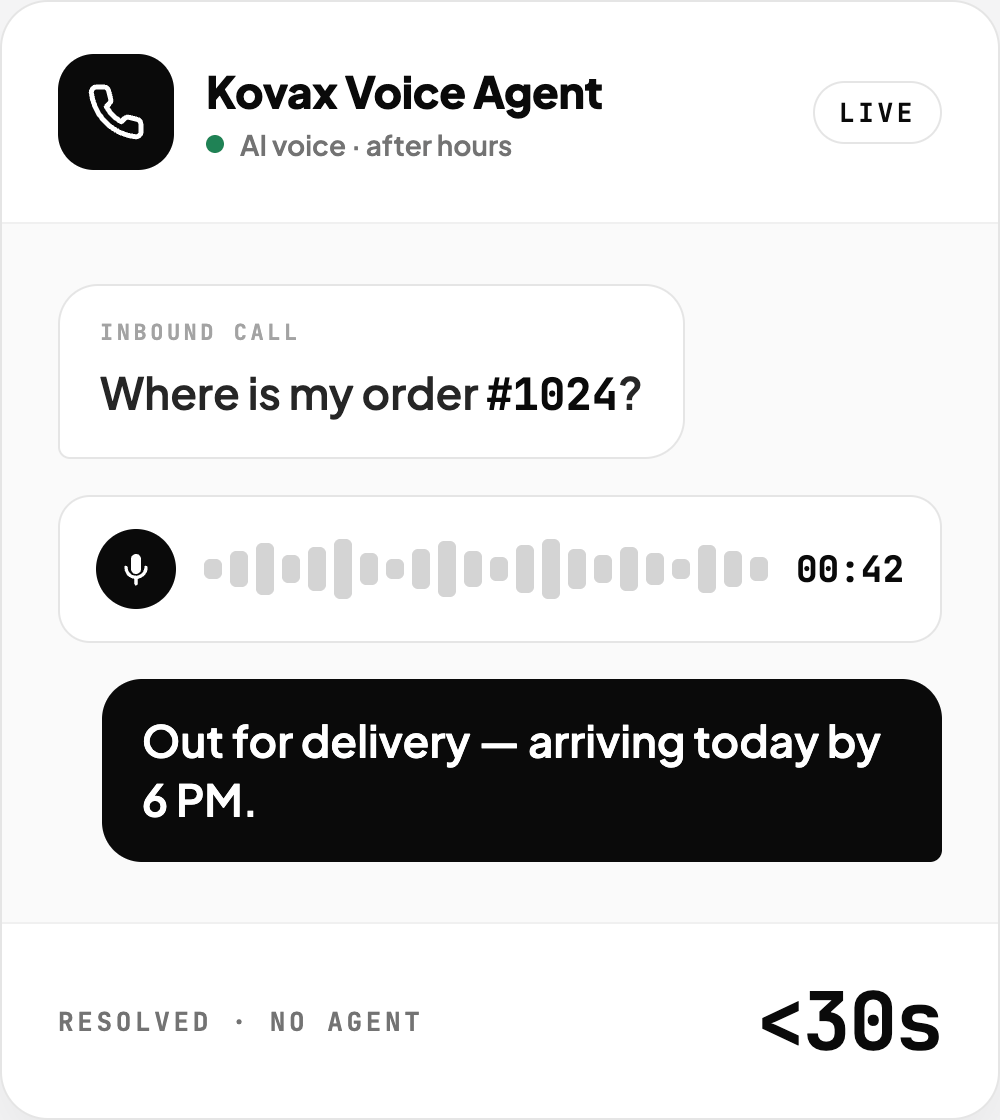
Some customers will always pick up the phone, and off-hours calls are the ones a small team can't cover. This is where an AI voice agent earns its keep. Kovax answers WISMO calls around the clock, pulls the live order status, and reads the customer their tracking in a normal conversation. No hold music, no "we open at 9." The kind of white glove, always-on response that used to require a full call center, without staffing one. Your team stops spending its mornings reading tracking numbers and gets to handle the problems that genuinely need a person.
Close the last-mile blind spot
Since last mile is where tracking usually goes quiet, lean on carrier data and delivery estimates to keep talking to the customer through that stretch. Even a "your package is with the local carrier and expected today" message covers the exact window that generates the most WISMO.
Stack these and the math changes fast. Proactive updates and self-service handle the bulk of contacts on their own, and an AI agent mops up whatever's left, at any hour, without adding headcount.
AI for WISMO: chatbots vs voice
Once you decide to put AI on WISMO, the real choice is what kind.
Text chatbots and AI agents are the obvious first move, and they're fine for what they are. A chatbot on your site can catch a customer, ask for the order number, and show tracking without a human. If someone's already on your page and comfortable typing, it works.
But a chatbot only helps the customer who came to your website and chose to type. It does nothing for the person who'd rather call, and it's useless for the after-hours caller who gets your voicemail. That's a big chunk of WISMO, and it's often your least patient customer, the one already annoyed enough to dial instead of click.
That's the wedge for AI voice. A voice agent picks up the call your chatbot can't, at 11pm, on a Sunday, during your Black Friday rush, and handles the whole thing start to finish. It's the difference between deflecting the customers who were willing to self-serve anyway and actually covering the ones who need to talk to someone. (See how one store did exactly this in the Eeveve support case study.)
For most Shopify stores the answer isn't one or the other. Use a chatbot for on-site self-service and a voice agent like Kovax for the phone. Together they cover WISMO across every channel a customer might use, instead of just the convenient one.
How to stop WISMO tickets in Shopify specifically
If you're on Shopify, the setup is pretty direct. Turn on proactive shipping notifications, add a branded tracking page app so customers get self-service order tracking, and connect a voice agent to handle inbound calls against your live Shopify order data. Because the AI reads straight from Shopify, it always has the current status, and you're not maintaining anything by hand. That combination is what takes WISMO from your biggest ticket category down to background noise.
Frequently asked questions
What does WISMO stand for?
WISMO stands for "Where Is My Order?" It's the term ecommerce and support teams use for any customer message asking about the status of an order they've already placed.
What are WISMO calls and tickets?
They're support contacts, by phone, email, or chat, where the customer is just checking on an order's progress or delivery date. They're status questions, not complaints, which is why so many of them can be prevented with better tracking visibility.
How do you reduce WISMO calls?
Close the information gap before the customer feels it. Send proactive shipping and delivery updates, give customers a clean self-service tracking page, keep communicating through the last-mile window, and use an AI voice agent to answer the calls that still come through, including after hours.
Why does WISMO matter for customer retention?
Because a customer who has to chase you for basic order status starts doubting your store even when delivery is on time. Reducing WISMO protects the post-purchase experience, which is a big part of whether someone buys from you again.
Can AI handle WISMO inquiries?
Yes. AI chatbots handle typed status checks on your site, and AI voice agents like Kovax handle the phone calls, pulling live order data and reading customers their tracking any time of day, without a human on the line.
Stop reading tracking numbers out loud all day
Every WISMO call is a status update the customer could have gotten on their own. Give them that update earlier, and let an AI voice agent cover the ones who still call, so your team spends its day on the problems that actually need a person.
See what WISMO is costing your store - book a demo of the Kovax voice agent and we'll run it against your real Shopify orders.
Related reading: How Eeveve cut cost-per-call with voice AI · Reduce RTO on COD orders