TL;DR. UGC marketing is the practice of using content your own customers create, photos, videos, reviews, and unboxings, to sell your products. It works because shoppers trust other shoppers more than they trust brands. For an ecommerce store, UGC lifts product-page conversions, makes ads perform better, and costs a fraction of studio content. This guide covers what UGC marketing is, why it drives sales, the types that convert, and exactly how to collect and use it across your store.
What UGC Marketing Actually Is
UGC marketing means putting user-generated content, anything your customers make about your product, to work across your store and campaigns. That includes product reviews, customer photos and videos, unboxing clips, testimonials, social posts that tag your brand, and Q&A left on your product pages.
The distinction that matters: UGC is not content your brand made and it is not paid influencer content. It is the real, unpolished stuff a customer posts because they actually bought and used the thing. That authenticity is the whole point. When someone asks “what is UGC in marketing,” the short answer is content created by customers, not by the brand, used by the brand to build trust and sell.
For ecommerce specifically, UGC is less about going viral and more about quietly removing doubt at the moment someone is deciding whether to buy. It is one of the highest-leverage pieces of your broader content marketing for ecommerce, because the content is made for you, by the people you are trying to convince.
Why UGC Drives Ecommerce Sales
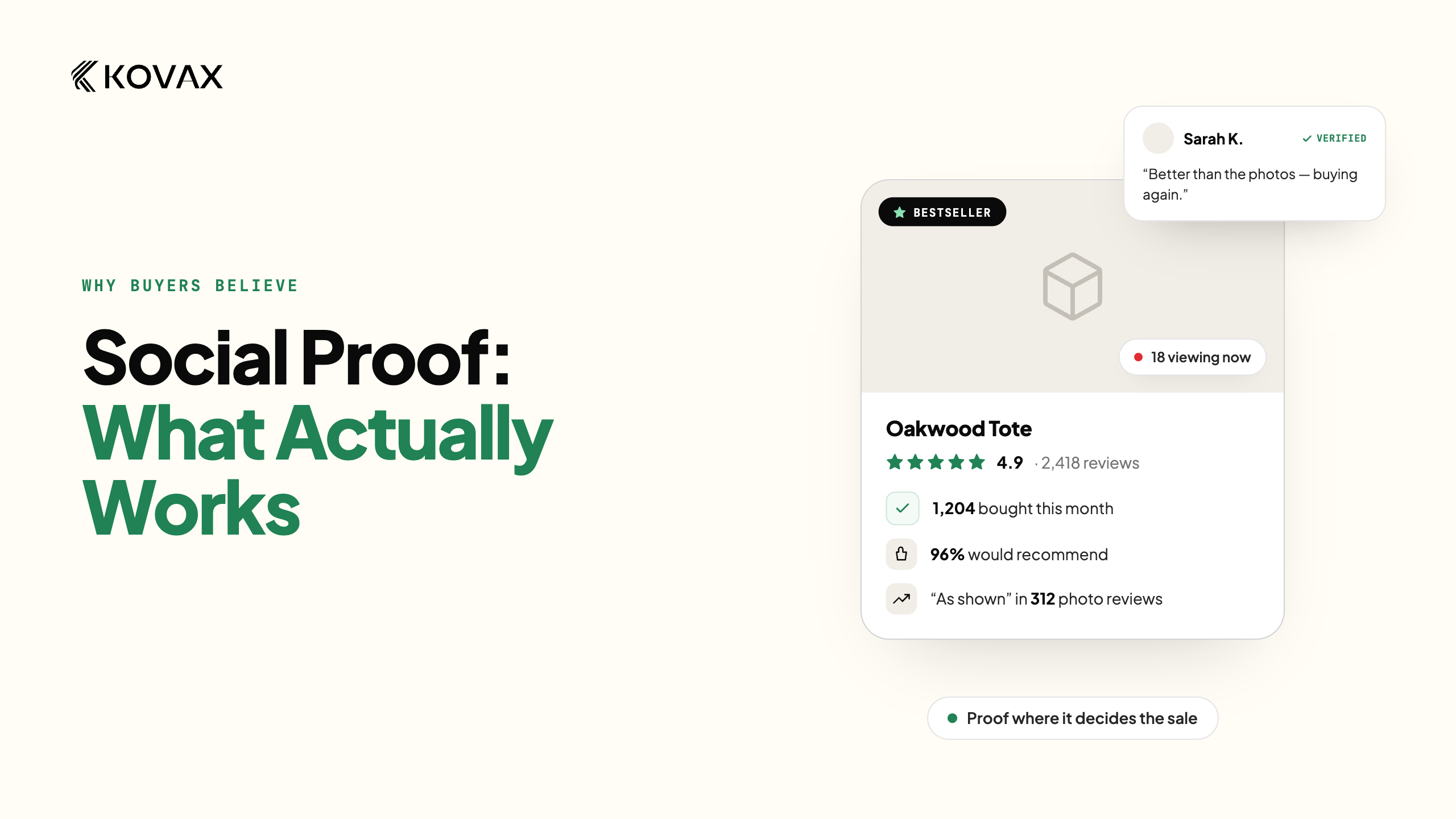
Every online purchase carries a small amount of fear: will this look like the photos, will it fit, will it actually work. Brand content cannot fully answer that, because shoppers know the brand is selling. Another customer’s photo can. This is social proof, and social proof marketing is the mechanism underneath every UGC win. It works the same way trust badges do: outside signals that the store is safe to buy from.
Three reasons UGC moves the needle for an online store:
- It answers the real question. A customer photo shows the product in a real home, on a real body, in real light. That closes the gap between the listing and reality better than any studio shot.
- It is trusted more than brand content. 88% of shoppers trust recommendations from people they know more than any other channel (Nielsen).
- It shows up where decisions happen. Reviews and photos on the product page reach people who are already in buying mode, which is why UGC tends to lift conversion rather than just awareness.
The result is compounding: better product pages convert more of the traffic you already have, and UGC-based ads bring cheaper traffic in. You are not paying for reach twice.
UGC Statistics Worth Knowing
- 88% of shoppers trust recommendations from people they know more than any other channel, and roughly 50% more people trust peer recommendations than lesser channels like banner, mobile, SMS, or SEO ads (Nielsen, 2021 Trust in Advertising).
- Social posts featuring UGC have driven over 10 times higher conversion rates than posts without it (Shopify, reporting Emplifi 2025 data).
- 95% of shoppers regularly read product reviews as part of their shopping journey (Shopify, reporting PowerReviews 2025 data).
- 65% of US consumers rely on UGC when making buying decisions (Shopify, reporting Bazaarvoice data).
- 91% of shoppers are more likely to buy when reviews include photos and videos, not just text (Shopify, reporting PowerReviews data).
Used well, a section like this doubles as link-bait: other sites cite a clean, well-sourced stats roundup, which is why “user generated content statistics” is worth owning.
The Types of UGC That Actually Sell
Not all UGC pulls the same weight. Ranked roughly by impact for an ecommerce store:
- Reviews and ratings. The workhorse. They sit on the product page and answer the buy-or-not question directly.
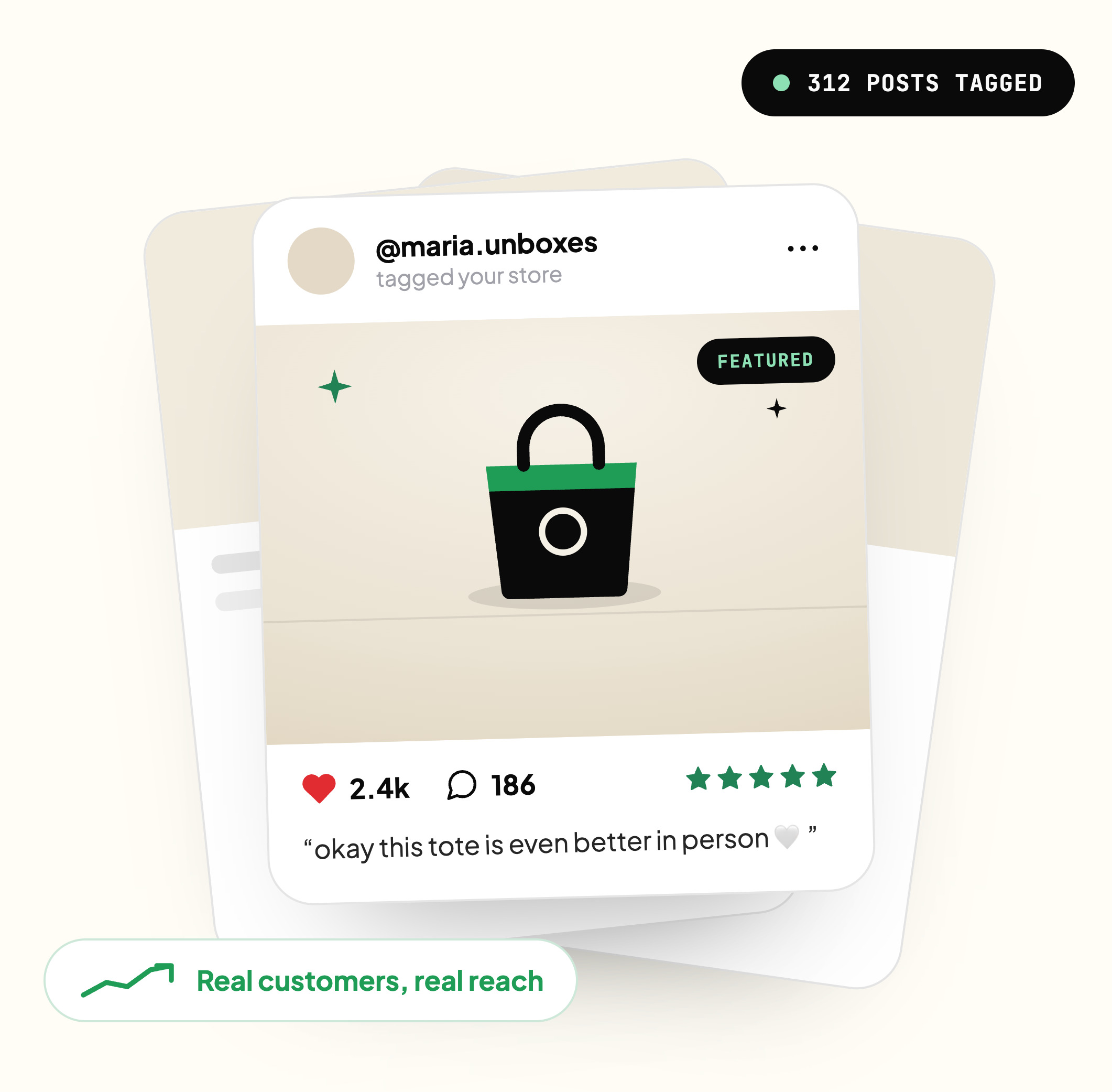
- Customer photos. Real product-in-context shots. Strongest on visual categories like apparel, home, and beauty.
- Customer videos and unboxings. High trust, high engagement, and reusable as ad creative.
- Testimonials and results. Before-and-after or outcome stories, especially for products that solve a problem.
- Social posts and tags. Good for reach and community, weaker at the point of sale unless you pull them onto the site.
The pattern: the closer the UGC sits to the product page, the more it converts. The further out (social), the more it does for awareness.
How to Collect UGC (Without Begging for It)
Most stores under-collect UGC because they never ask at the right moment. A simple UGC campaign fixes that:
- Ask right after the win. The best time to request a photo or review is just after delivery, when the customer is happiest. A post-purchase email or message asking for a quick photo or review is the single highest-return move.
- Make it effortless. One tap to leave a review, a clear hashtag for social, a direct link. Friction kills participation.
- Give a reason. A small incentive, a feature on your page, entry into a giveaway. User generated content campaigns run on a light nudge, not a bribe.
- Always get rights. Ask permission before you repost or run UGC in ads. A simple reply-to-approve or a rights request tool keeps you safe.
The stores that win at UGC are not luckier. They just ask, every order, at the right moment.
How to Use UGC Across Your Store
Collecting is half the job. The return comes from placement:
- Product pages. Reviews, ratings, and customer photos directly on the listing. This is where UGC ecommerce results are largest, because it converts existing traffic.
- UGC ads. Real customer videos as paid creative. UGC ads frequently beat studio ads on cost and click-through because they look native, not like ads.
- Email and SMS. Drop customer photos and reviews into abandoned-cart and post-purchase flows to close hesitant buyers.
- Homepage and collection pages. A social wall or “as seen by customers” strip builds trust before the shopper even reaches a product.
- Social proof everywhere. Star ratings near the add-to-cart button, review counts on collection tiles, recent-purchase or photo callouts.
The rule for UGC for ecommerce: put the proof where the doubt is. Wherever a shopper hesitates, a real customer’s content should be sitting right there.
Common UGC Mistakes to Avoid
- Using UGC without permission. Always get explicit rights before reposting or advertising. This is a legal must, not a nicety.
- Only collecting, never displaying. Reviews stuck in a dashboard do nothing. Surface them on the page.
- Over-editing it. Polishing UGC until it looks like a brand ad kills the authenticity that made it work.
- Ignoring negative reviews. A page with only five-star reviews reads as fake. A few honest mixed reviews build more trust, not less.
- Chasing vanity reach. A viral tag is nice, but photos and reviews on the product page sell more than social impressions.
Where Great UGC Really Comes From
Here is the part most guides skip: UGC is a byproduct of a good customer experience. Nobody posts a happy unboxing or leaves a glowing review after a frustrating one. The stores that get flooded with UGC are the ones that get the whole post-purchase customer experience right, fast answers, clear delivery updates, problems solved before they turn into complaints.
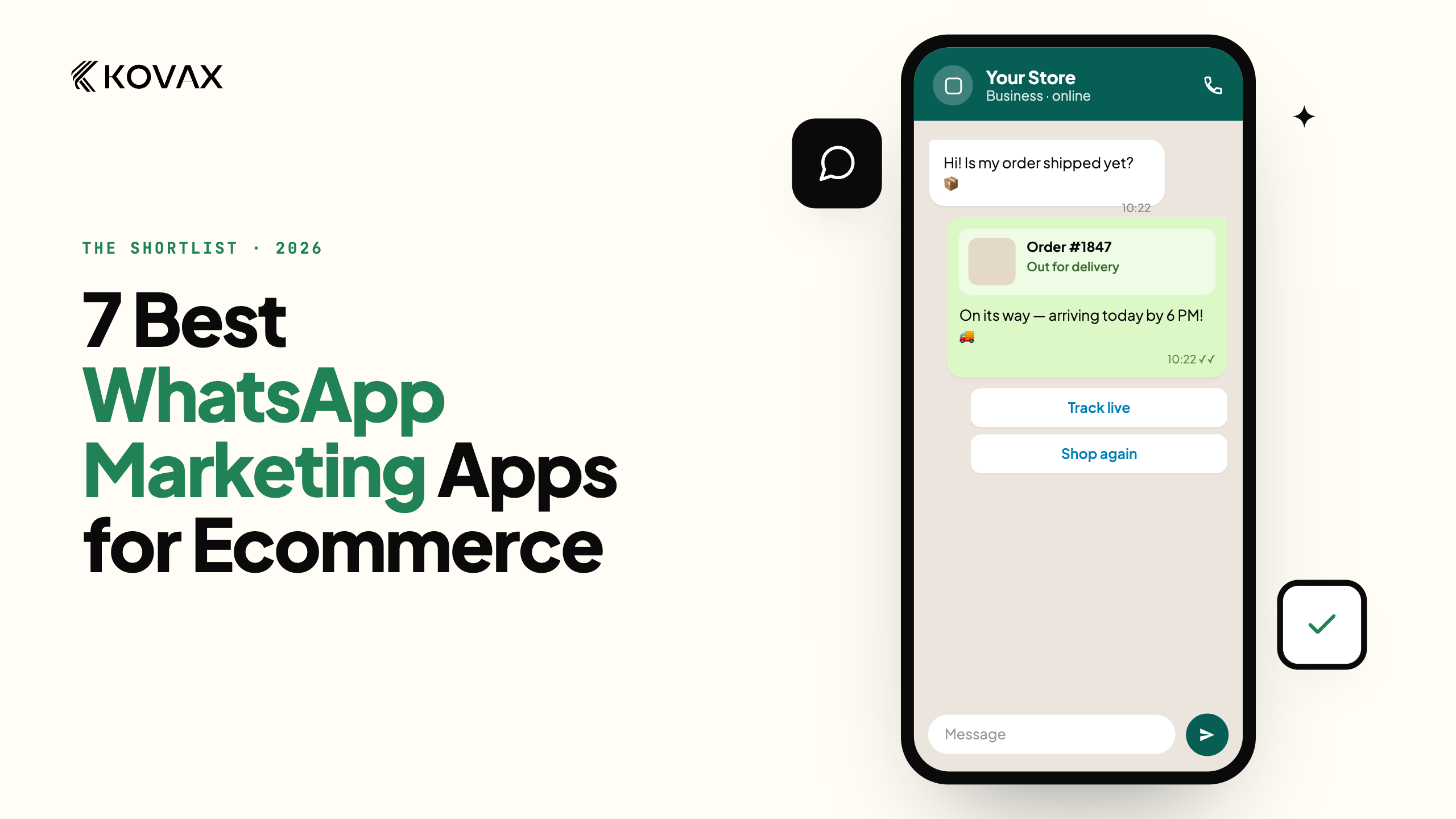
So the real UGC strategy starts earlier than the campaign: make customers happy enough that creating content feels natural. Tools that keep the post-purchase experience smooth, like Kovax for support, delivery questions, and WhatsApp, quietly feed the top of your UGC funnel by turning more buyers into satisfied ones worth hearing from.
FAQ
What is UGC in marketing?
UGC (user-generated content) in marketing is content created by customers rather than the brand, such as reviews, photos, videos, and social posts, that a brand then uses to build trust and drive sales.
What does UGC stand for in marketing?
UGC stands for user-generated content: any content about a product made by the people who use it, not by the company that sells it.
What are UGC ads?
UGC ads are paid ads built from real customer-style content, usually a customer video or photo, rather than polished studio production. They tend to feel native and often perform better on cost and click-through.
Does UGC increase sales?
Yes. UGC increases sales mainly by lifting product-page conversion, because real customer proof reduces the doubt that stops people from buying. Around 65% of US consumers rely on UGC when deciding what to buy (Shopify), and it also lowers ad costs when used as creative.
How do I collect UGC for my store?
Ask at the moment of highest happiness, just after delivery, make it one tap to leave a review or photo, give a small reason to participate, and always get permission before you repost or advertise it.
UGC vs influencer marketing, what is the difference?
Influencer content is paid and comes from a creator with an audience. UGC comes from ordinary customers and is valued for authenticity over reach. Many stores use both, but UGC is usually cheaper and converts better on the product page.
Turn Happy Customers Into Your Best Marketing
UGC marketing works because it replaces your voice with your customers’, at the exact moment a shopper is deciding whether to trust you. Collect it at the post-purchase high point, get the rights, and place it where the doubt lives: the product page, your ads, and your flows. The brands that win at UGC are simply the ones that make customers happy enough to create it, and then actually put it to work.
For the experience side of that equation, see how Kovax keeps the post-purchase moment smooth so more customers are glad they bought.