What the Outsourcing Market Actually Looks Like in 2026
Customer service outsourcing means paying another company to handle your customers' calls, chats, or emails instead of hiring your own team. It's one of the largest parts of a bigger industry called business process outsourcing, or BPO for short, which just means paying an outside company to run a business task for you.
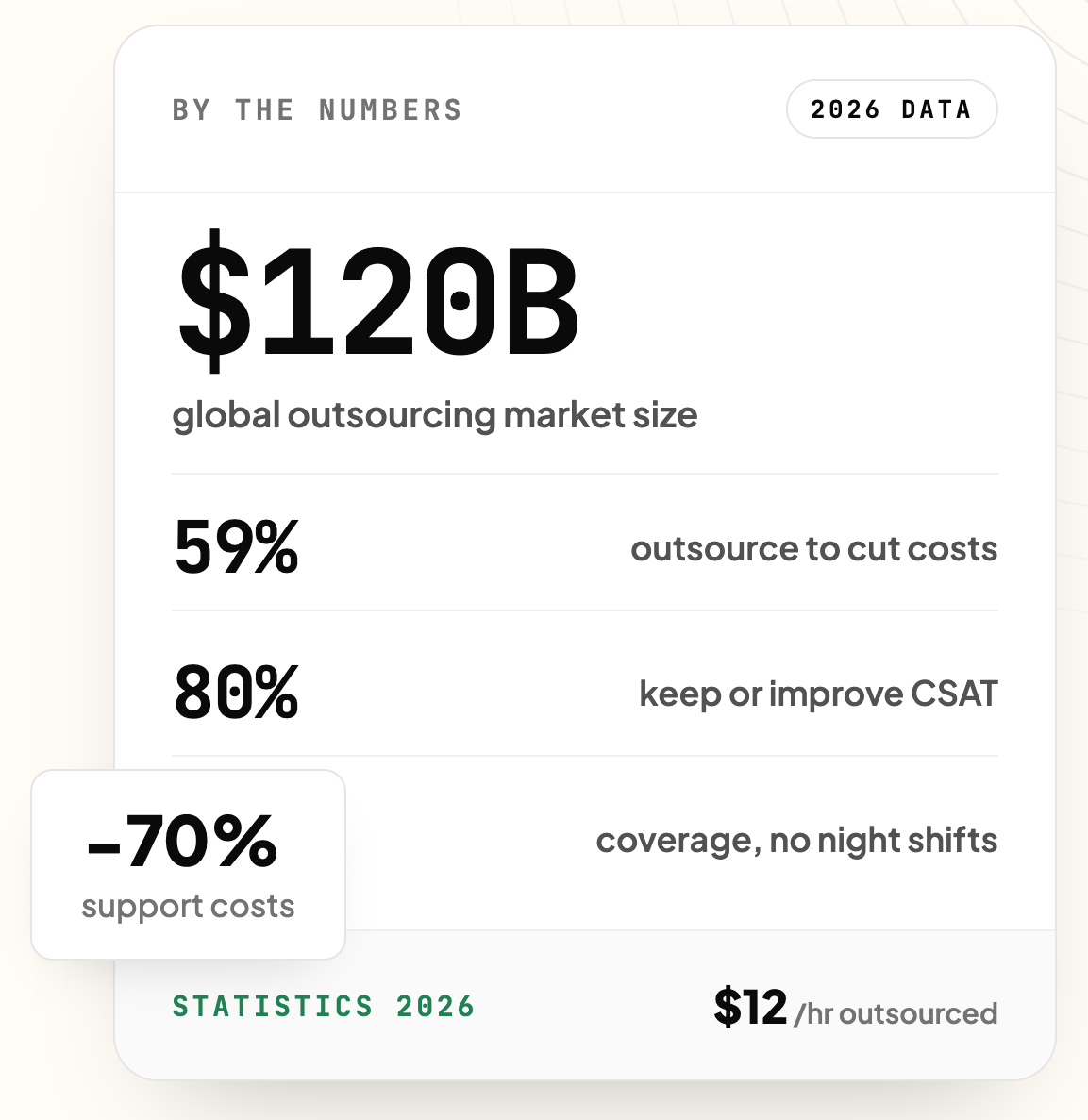
The overall BPO market is worth $434.99 billion in 2026. The customer-service-specific slice of that market was $86.4 billion in 2023 and is on track to reach $110.6 billion by 2030, growing at roughly 3.7% a year.
What's actually changed lately isn't the size of the market. It's what companies are spending that money on. A growing share is going toward tools that use artificial intelligence, not just toward hiring more people abroad.
What It Really Costs
The numbers below are the ones that matter most when comparing your options.
Hiring an agent to work offshore, typically in the Philippines or India, costs $6 to $14 an hour. Looked at as a yearly salary instead, a fully staffed US-based agent runs $52,000 to $73,590 a year, against $14,000 to $21,120 for a Philippines-based agent and $12,000 to $18,000 for an India-based one.
Per resolved ticket, in-house support in North America averages $22, compared with $6 to $13 for outsourced offshore support.
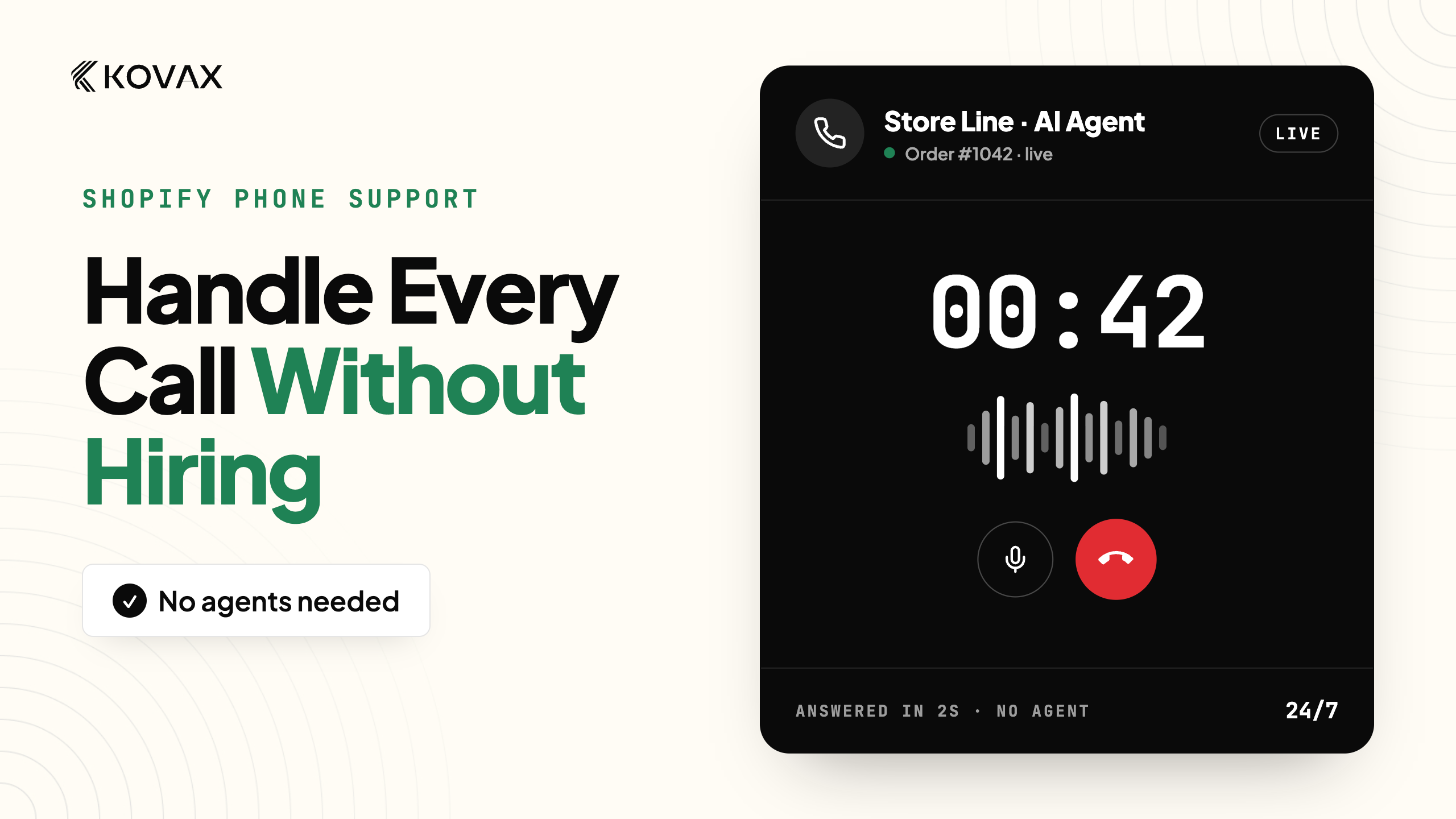
The newest number worth knowing: software that answers phone calls using AI, called an AI voice agent, now costs about $0.40 per call, against $7 to $12 per call for a human agent. That gap is the main reason cost conversations have shifted in the last two years.
Outsourcing Companies, AI Voice Agents, or Both
Three approaches tend to get lumped together, and it helps to separate them.
A traditional outsourcing company, sometimes called a call center, hires and manages human agents on your behalf, usually abroad. You get people, not software. A trained person can handle a wide range of unexpected situations, but the cost is higher and, as the next section shows, less consistent.
An AI voice agent is software that answers or places phone calls using AI, without a person on the line. It works well on repetitive, well-defined questions, like an order status check, and is far cheaper per call. It struggles more with open-ended or emotionally difficult conversations.
Most companies actually use a mix of both, a person available for harder cases and AI handling the repetitive volume. Very few set-ups today are purely one or the other.
What the Quality Data Says
Cost gets most of the attention, but quality and staffing matter just as much.
Turnover at outsourced call centers runs high. Average annual turnover sits at 40% to 45%, and 69% to 73% of agents leave within their first year. In plain terms, most of the people answering your customers' calls at a typical outsourced center won't still be in that job a year from now.
Customer satisfaction, meaning how happy customers say they are after an interaction, is close between the two options: 85% for in-house teams versus 82% for outsourced teams. That's a small gap, not a dramatic one.
Most companies are still glad they outsourced. 78% say they're satisfied or very satisfied with their arrangement. When they're not, the top reasons are agent turnover (41%), inconsistent quality (35%), and poor communication with the provider (28%).
The Real Risk Buyers Miss
A cheaper hourly rate doesn't automatically mean cheaper support. An agent who leaves after a few months has to be replaced and retrained, and that cost doesn't show up in the headline hourly number. The savings from outsourcing are real, but they're smaller once turnover is factored in, and that's the part most pitches leave out.
What AI Is Changing, and What It Isn't
The clearest sign of change isn't marketing, it's internal pressure. 91% of customer service leaders say they're under pressure from their own leadership to implement AI in 2026.
That pressure lines up with the cost gap covered earlier, roughly $0.40 a call for AI versus $7 to $12 for a human agent. But two other numbers complicate the simple "AI is just cheaper" story. The cost of AI-generated responses per resolved issue could exceed the cost of offshore human agents by 2030, as the computing costs behind more advanced AI rise. And 50% of companies that cut customer service staff because of AI expect to rehire by 2027. Read together, today's AI cost advantage is real, but it isn't guaranteed to hold in its current form, and removing people entirely hasn't worked out for everyone who tried it.
One more number for context: 74% of consumers now expect customer service to be available every hour of every day. That expectation, more than any single technology, is what's pushing companies toward tools that don't need to sleep.
Common Mistakes People Make With These Numbers
- Looking only at the hourly rate. The gap between $6 and $52,000 a year looks huge until turnover and retraining are added back in.
- Treating "AI is cheaper" as permanent. The same research that shows AI's current cost advantage also shows that advantage could shrink later in the decade.
- Ignoring the satisfaction data because the cost numbers are more exciting. A cheaper option that produces a worse customer experience isn't automatically a good trade.
- Assuming one statistic applies to every business. Call volume, complexity, and customer expectations differ a lot by industry and by store size.
A Simple Way to Decide
Three questions, using the numbers above, cover most of the decision: how repetitive are your customer contacts, since AI performs best on repetitive questions, how much does turnover currently cost you, whether that's your own hiring or a provider's agent replacement cycle, and how much does round-the-clock availability matter to your customers, given most now expect it. The answers point to different mixes of in-house staff, outsourced staff, and AI tools depending on the business. There's no single right answer for everyone.
FAQ
How big is the customer service outsourcing market in 2026?
The customer-service-specific portion of the BPO market was $86.4 billion in 2023, projected to reach $110.6 billion by 2030.
How much does it cost to outsource customer service?
Offshore agents typically cost $6 to $14 an hour. On a per-ticket basis, outsourced offshore support runs $6 to $13 against about $22 for in-house support in North America.
Is AI actually cheaper than outsourcing?
Right now, yes, by a wide margin, roughly $0.40 per call against $7 to $12 for a human agent. That gap may not stay this wide forever, since AI cost per resolved issue could exceed offshore costs by 2030.
Does outsourcing hurt quality?
Not automatically. Satisfaction scores for outsourced teams average 82%, close to the 85% average for in-house teams. The bigger quality risk is turnover, which runs 40% to 45% a year at outsourced centers.
Are companies happy with their outsourcing arrangements overall?
Mostly. 78% report being satisfied or very satisfied. The top complaints are turnover, inconsistent quality, and poor communication with the provider.
Where to Go From Here
If you want to see how these numbers apply to your own store's call volume, Kovax's support agent is one example of the AI-based option covered here.